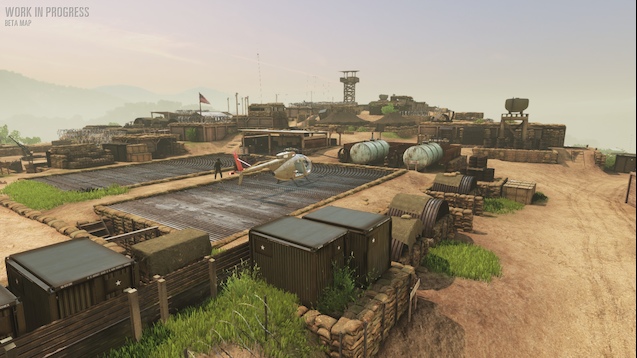
Details: US Forces have access to a single Loach helicopter, it will despawn once Objective E is taken. (This mechanism is subject to change)
History:ΓΒ TheΓΒ Battle of Fire Support Base RipcordΓΒ was a 23-day battle between elements of theΓΒ U.S. ArmyΓΒ 101st Airborne DivisionΓΒ and two reinforced divisions of theΓΒ North Vietnamese ArmyΓΒ from July 1, 1970 until July 23, 1970. It was the last major confrontation between United States ground forces andΓΒ North VietnamΓΒ of theΓΒ Vietnam War. ThreeΓΒ Medals of HonorΓΒ and sixΓΒ Distinguished Service CrossesΓΒ were awarded to participants for actions during the operations.ΓΒ As theΓΒ 101st Airborne DivisionΓΒ planned the attack on enemy supply bases, theΓΒ North Vietnamese armyΓΒ (NVA) was secretly observing their activities. From March 12 until June 30, the NVA was sporadically attacking the firebase. On April 29, President Nixon launched theΓΒ Cambodian IncursionΓΒ which was officially concluded on June 30 when the last U.S. troops left Cambodia. Immediately after this, the United States made one final attempt to block theΓΒ Ho Chi Minh Trail. After weeks of reconnaissance by the North Vietnamese, on the morning of July 1, 1970 the NVA launched aΓΒ mortarΓΒ attack on the firebase. During the 23-day siege, 75 US servicemen wereΓΒ killed, including ColonelΓΒ Andre Lucas, who was posthumously awarded theΓΒ Medal of Honor; and First Lt.ΓΒ Bob Kalsu, the only contemporaneously active pro athlete to be killed during the war. Losses of US forces were so great that officers began asking for volunteers from other units to go to Ripcord and reinforce the firebase. Finally , command realized that the position was not defensible, and the decision was made to withdraw. Fighting from four hilltops, surrounded, and outnumbered nearly ten to one, U.S. forces caused heavy losses on eight enemy battalions, before an aerial withdrawal under heavyΓΒ mortar,ΓΒ anti-aircraft, andΓΒ small armsΓΒ fire. After the U.S. Army withdrew from the firebase,ΓΒ USAFΓΒ B-52ΓΒ heavy bombers were sent in toΓΒ carpet bombΓΒ the areaΓΒ Major General (ret)ΓΒ Ben Harrison, then the commander of the 3rd Brigade of the 101st Airborne at FSB Ripcord, is of the opinion that perhaps the NVA losses at Ripcord, just as their losses of their major offensives of the Ia Drang in 1965 and Tet in 1968, crippled the offensive capability of NVA for two full years, resulting in the delaying of theirΓΒ Easter OffensiveΓΒ from 1971 to 1972.