by Powerbits
- This topic has 0 replies, 1 voice, and was last updated 4 months, 3 weeks ago by
 Powerbits.
Viewing 0 reply threads
- You must be logged in to reply to this topic.
Hello everyone, and welcome to Update 20!
This update coincides with the 82nd anniversary of D-Day, and with it, we are returning to Normandy as we deploy onto Juno Beach alongside the long-awaited Canadian Forces.
From new weapons, vehicles, and uniforms, to major armor overhauls, balance changes, quality of life improvements and bug fixes, Update 20 introduces a wide range of additions and refinements across the game.
We also want to take a moment to thank everyone who participated in the Experimental Branch tests ahead of release. Your feedback, bug reports, gameplay clips and discussions have been invaluable in helping us identify issues, refine balance, and shape the final release of this update.
Now, let’s dive into everything arriving with Update 20.
Update 20 introduces Juno Beach to Hell Let Loose, bringing players back to the Normandy coastline during the opening stages of the Allied invasion of occupied France.
Designed to stand apart from both Omaha Beach and Utah Beach, Juno Beach has been built to support a wide range of gameplay styles and combat encounters. From dense urban fighting and industrial strongholds, to open rural fields, navigable waterways and fortified defensive positions, the map offers a varied battlefield that evolves as the front-line shifts inland.
The map has also been designed around the introduction of the Canadian Forces, recreating the difficult advance through heavily defended coastal positions and into the towns and countryside beyond the beaches.
Across Juno Beach, players will encounter a diverse range of environments, including:
Below, we’ll take a closer look at each of the capture points featured across Juno Beach.
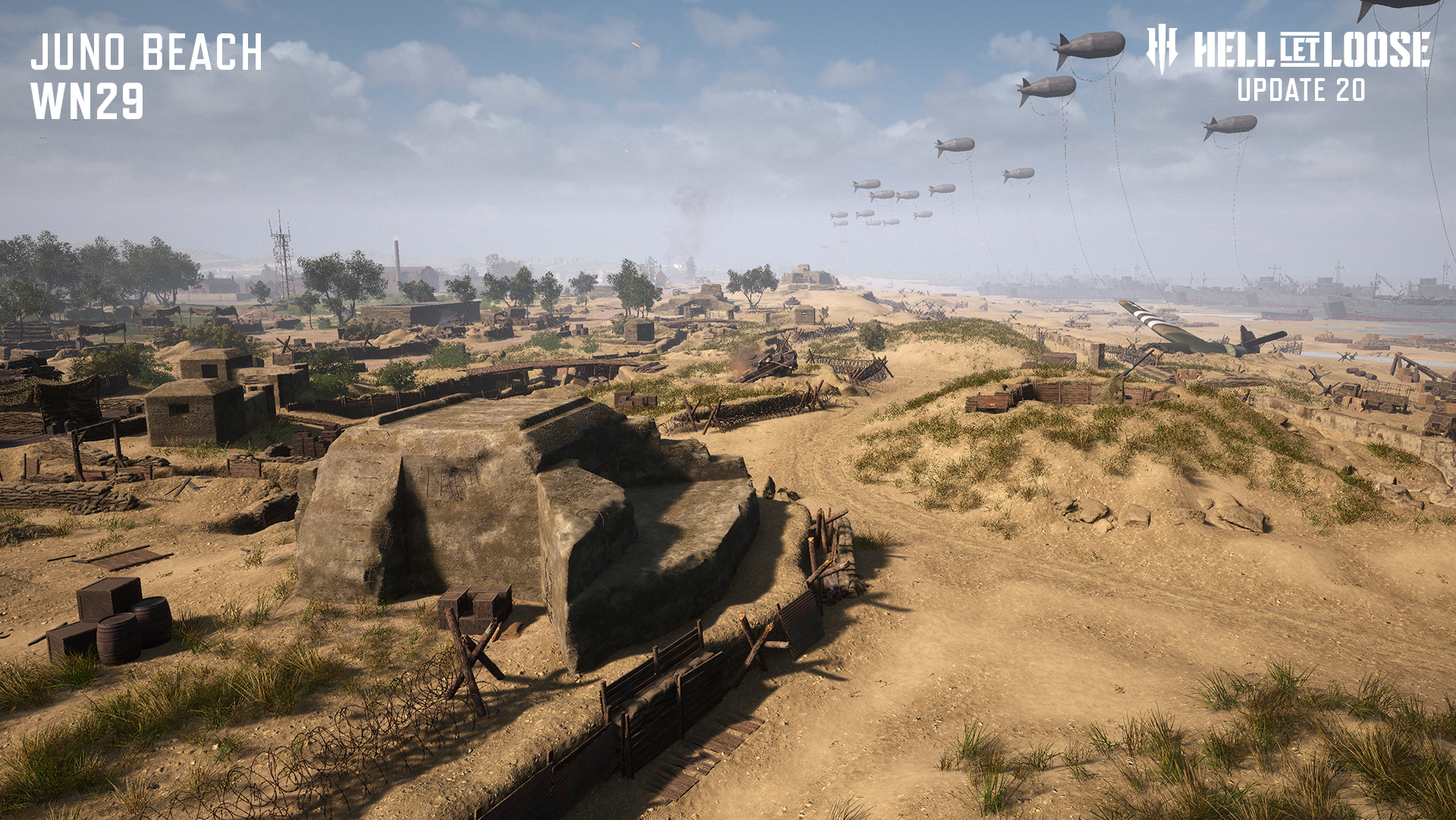
Regina Landing features the more rural outskirts of Courseulles-sur-Mer, where rugged terrain creates a natural defensive perimeter that the Canadian Forces must navigate in order to reach the town. The capture point offers dominant sightlines and strong strategic opportunities for defending forces.
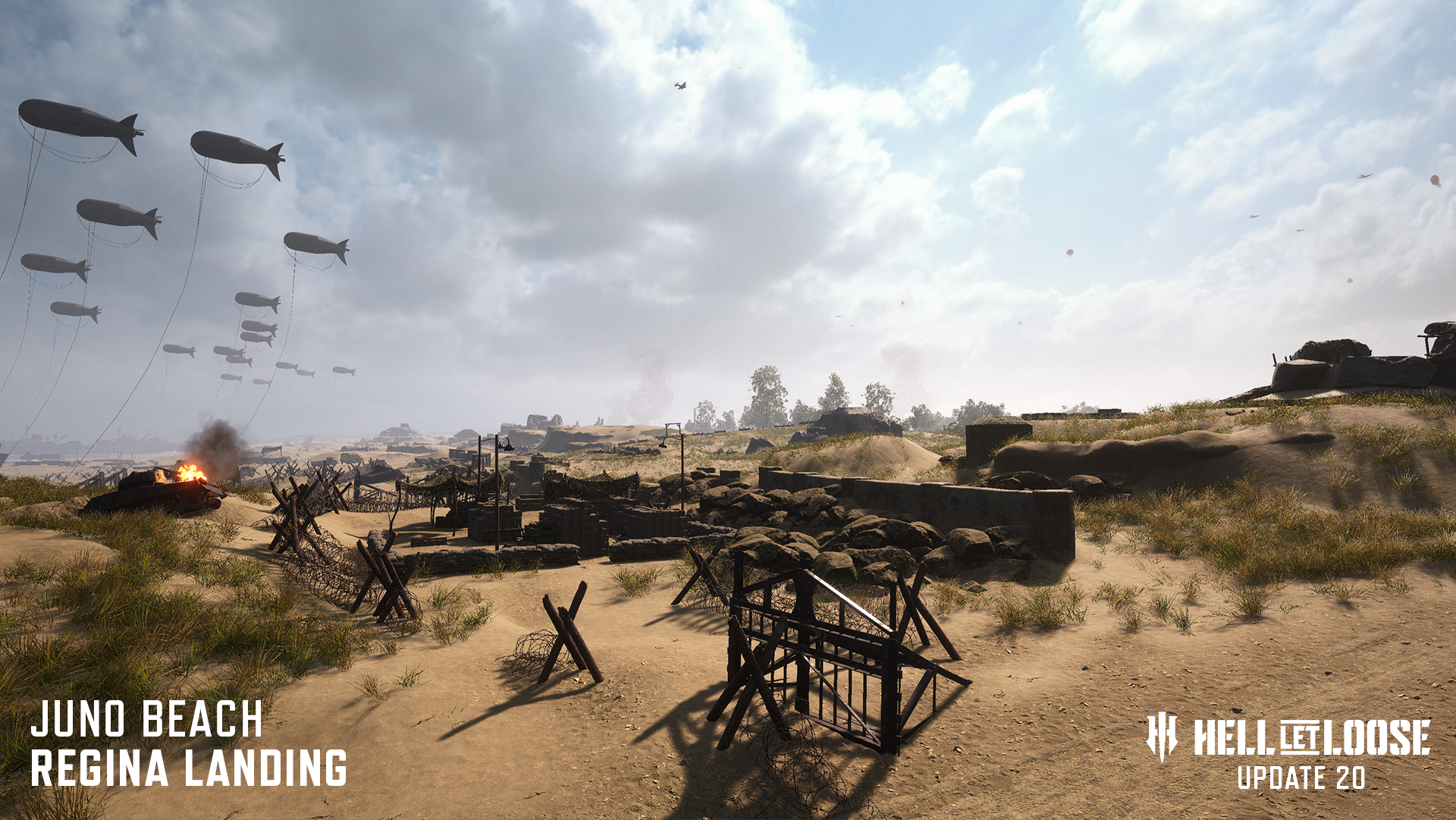
Part of the formidable Atlantic Wall defensive network, Bunker R612 stands as a heavily fortified strongpoint overlooking the coastline. Surrounded by barbed wire and difficult terrain, it presents a dangerous challenge for attacking forces attempting to push inland from the beaches.
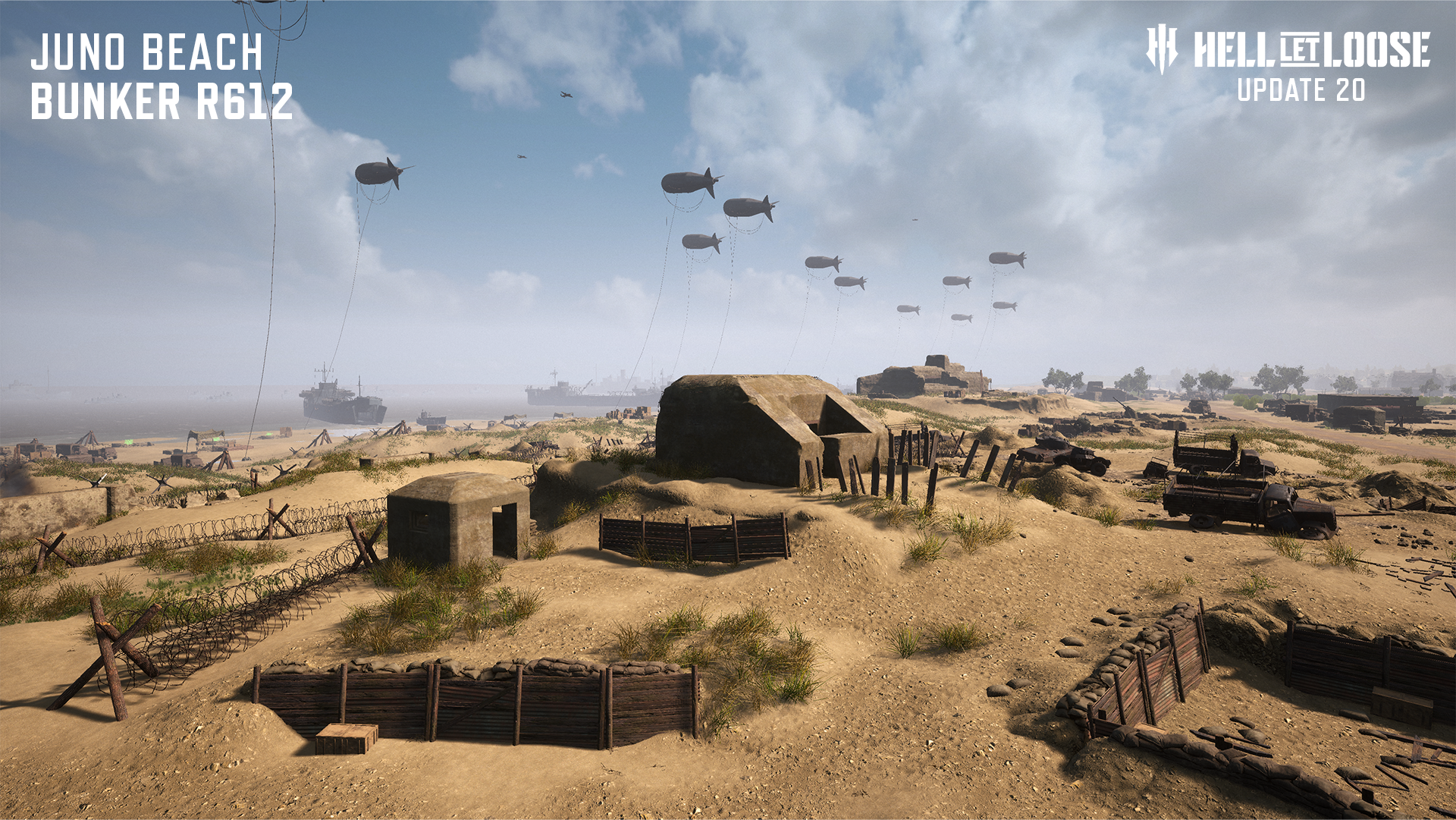
Serving as one of the final defensive positions before Courseulles-sur-Mer, WN29 features a formidable bunker overlooking the beach, the remnants of which still remain today. The tough-to-crack German Forces defensive line provided a challenge for the advancing Canadian Forces to push through.
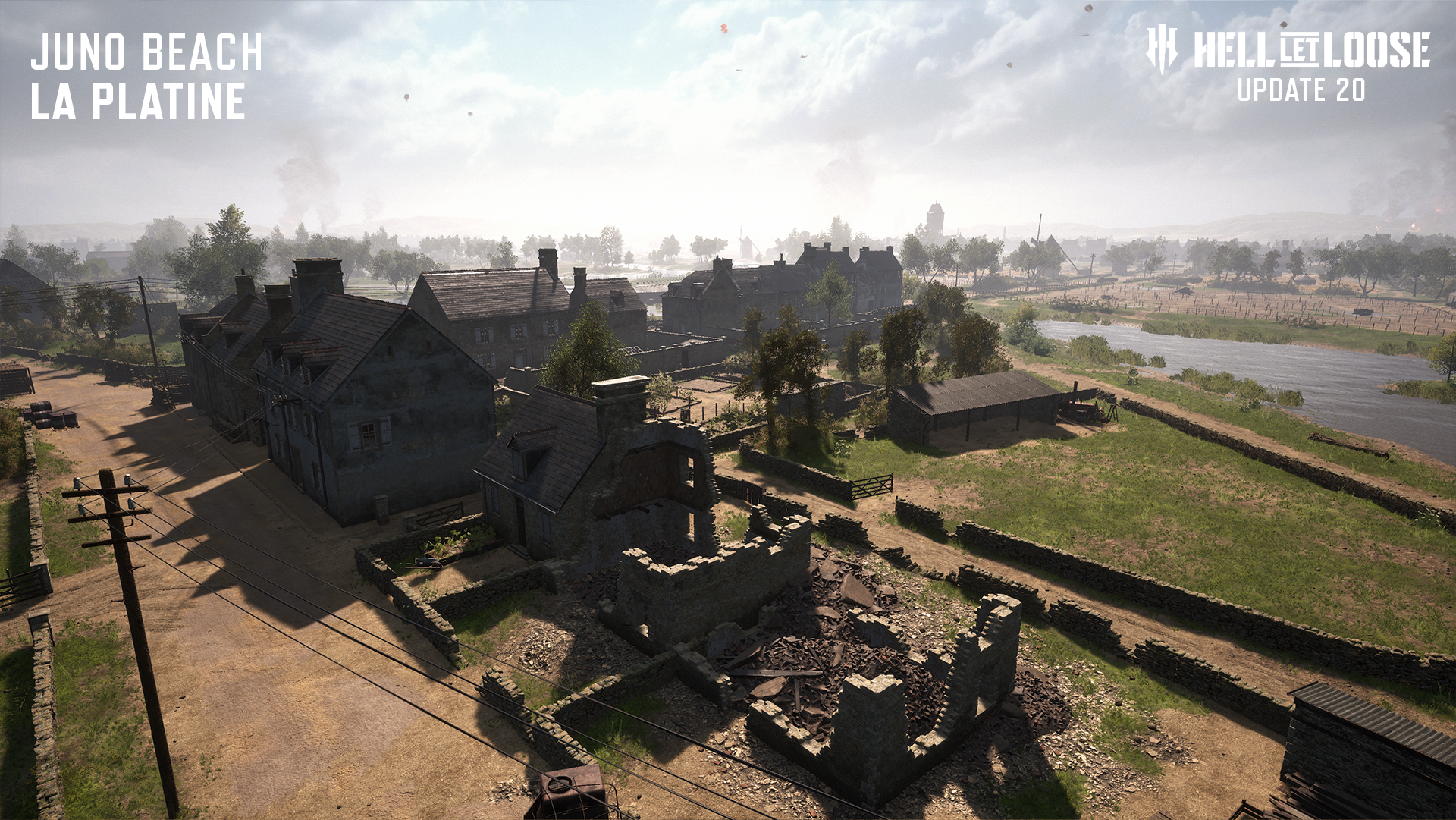
La Platine features the next line of the German defensive occupation, featuring a fortified checkpoint built around close-quarters combat encounters. Juxtaposed with wide open flooded fields that force players to make tactical decisions when attacking or defending the sector.
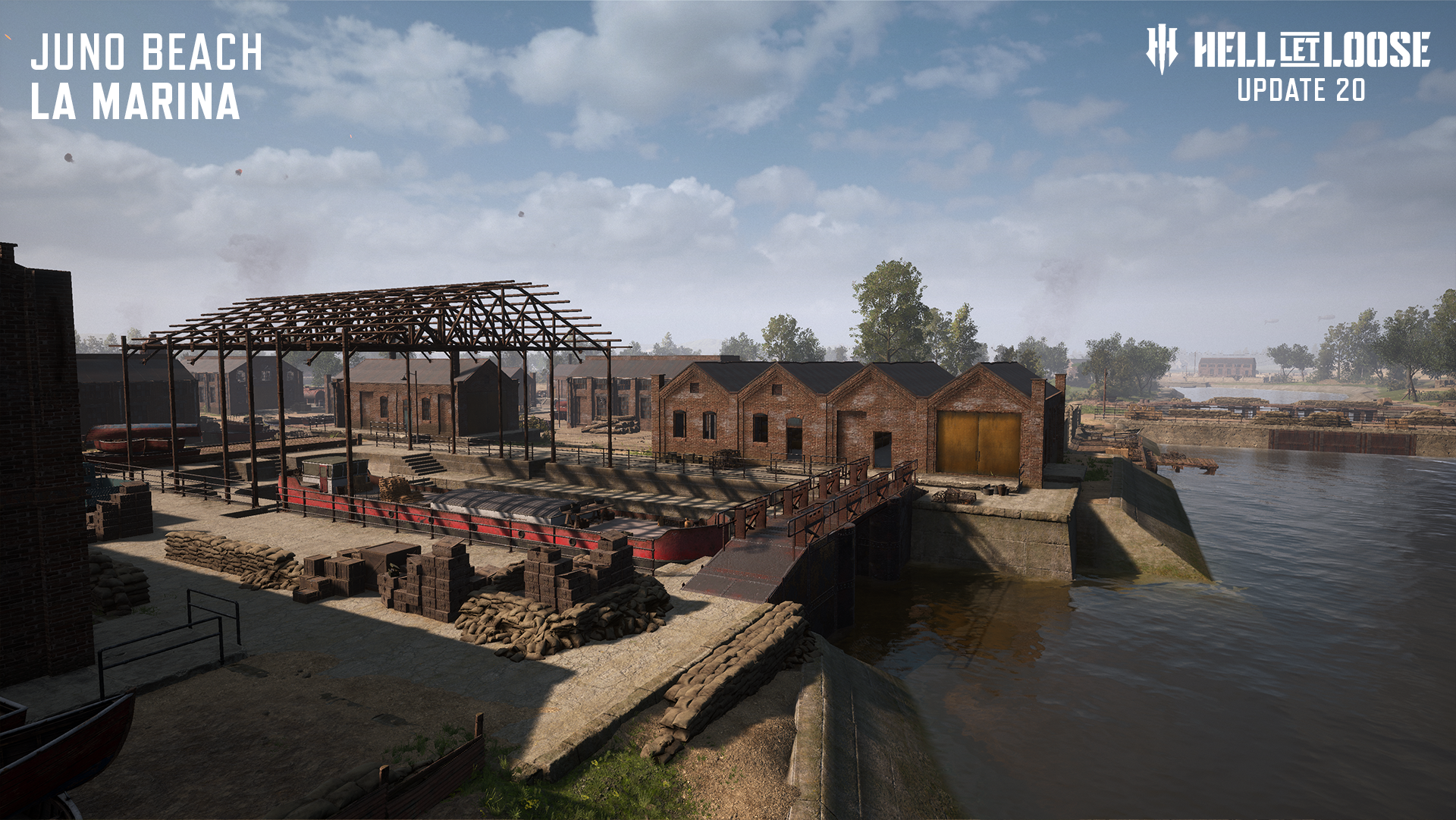
La Marina is a sprawling industrial shipyard used for marina storage and repairs. Featuring a mixture of open courtyards, narrow industrial lanes and enterable warehouses, the capture point creates tense vehicular navigation opportunities alongside intense infantry combat.
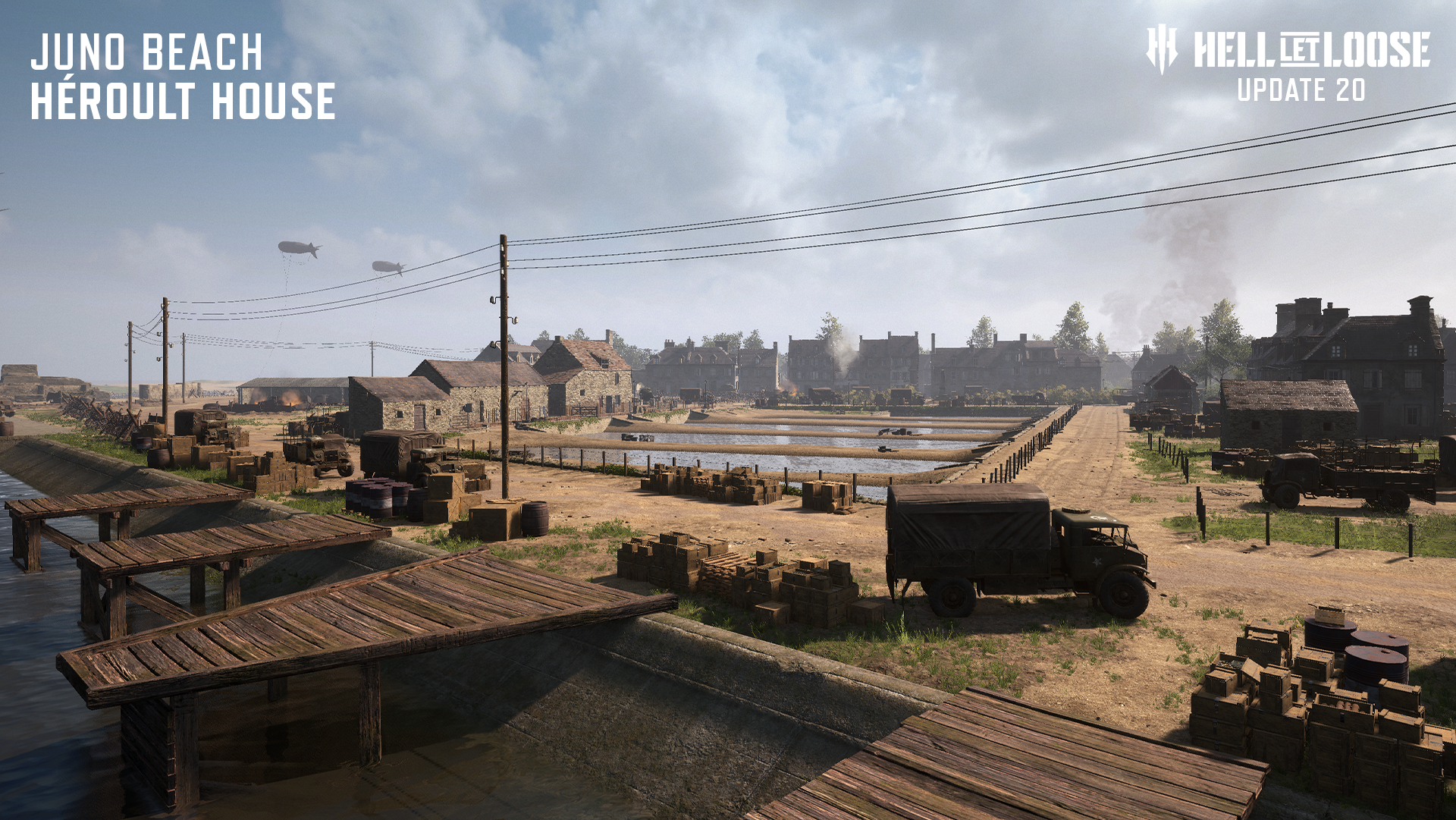
As players enter the maritime town Courseulles-sur-Mer, Héroult House becomes a key staging ground for some of the map’s early urban engagements. The Capture Point features a unique oyster farm that provides micro-elevation opportunities, alongside enterable buildings that overlook one another across tight streets and courtyards.
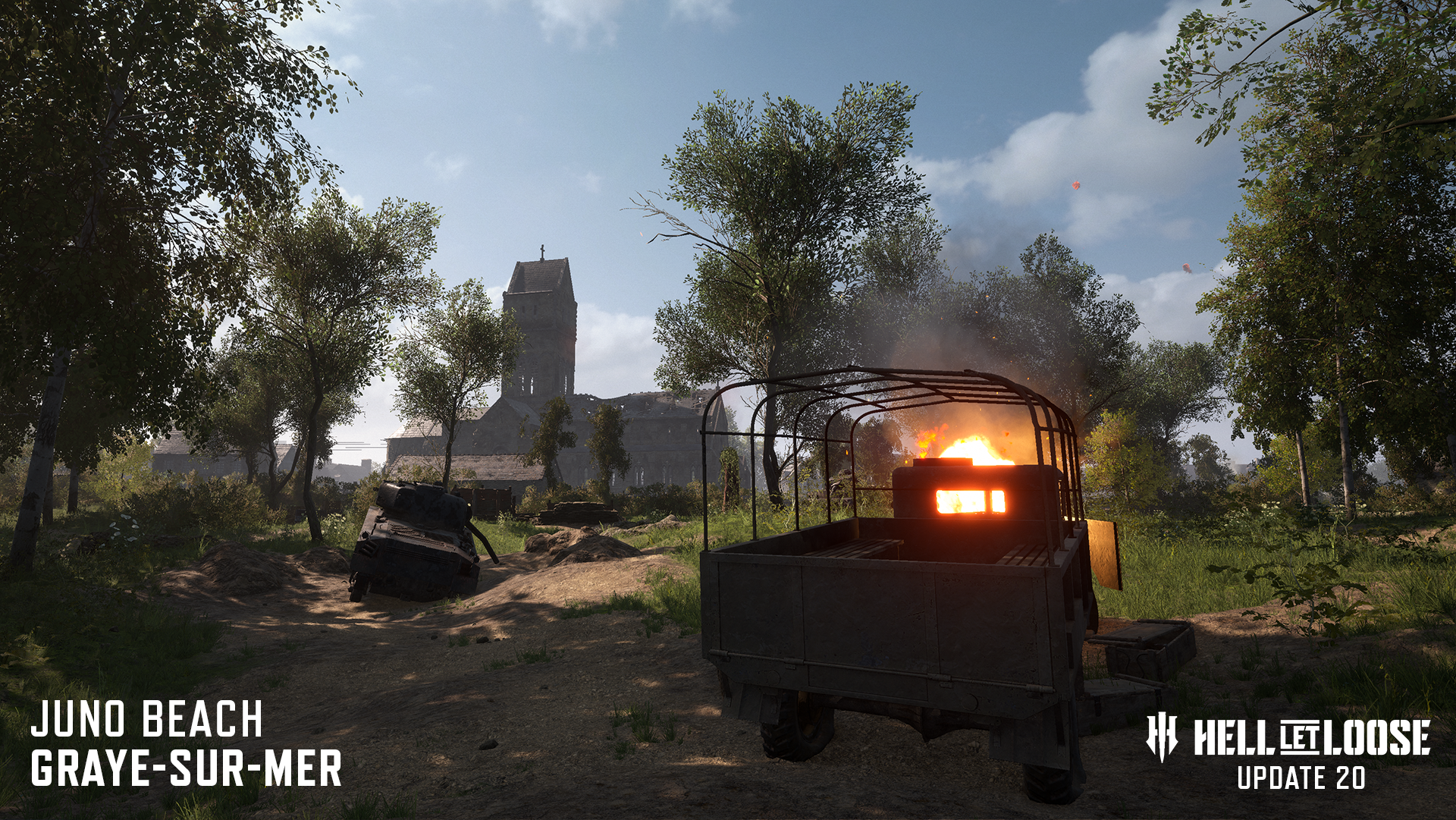
Graye-sur-Mer served as a strategic stronghold during the war, and players approaching from the north will need to navigate deep waterways, tactical bridge crossings and difficult terrain to gain control of the area. At the centre of the capture point stands an enterable church that provides a strong elevated position for both attackers and defenders.
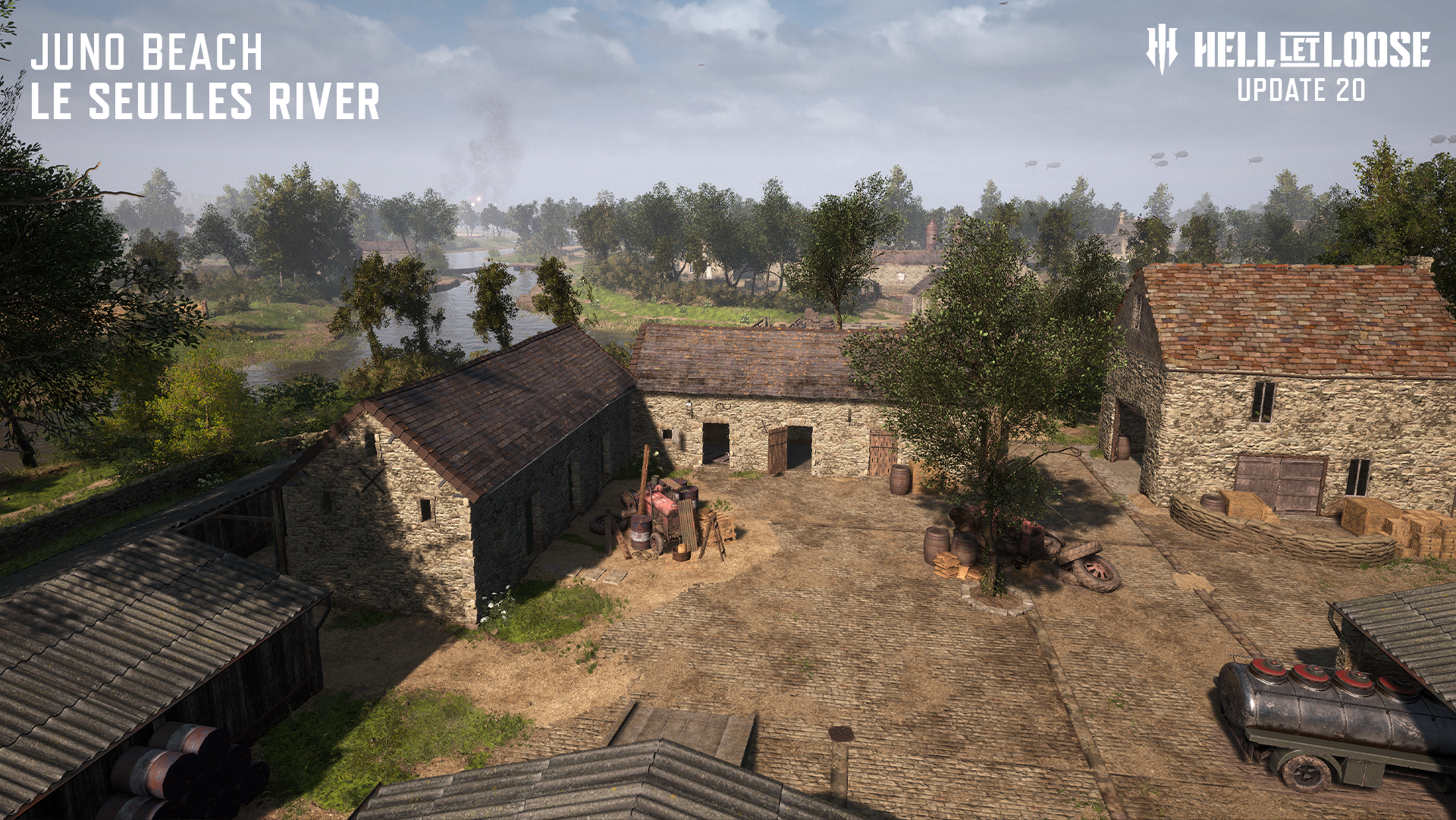
The Le Seulles River introduces a traversable water network that allows players to move more freely through the rural areas of the map. Dense hedgerows lining the waterways provide natural cover and create opportunities for a more dynamic and unpredictable combat space.
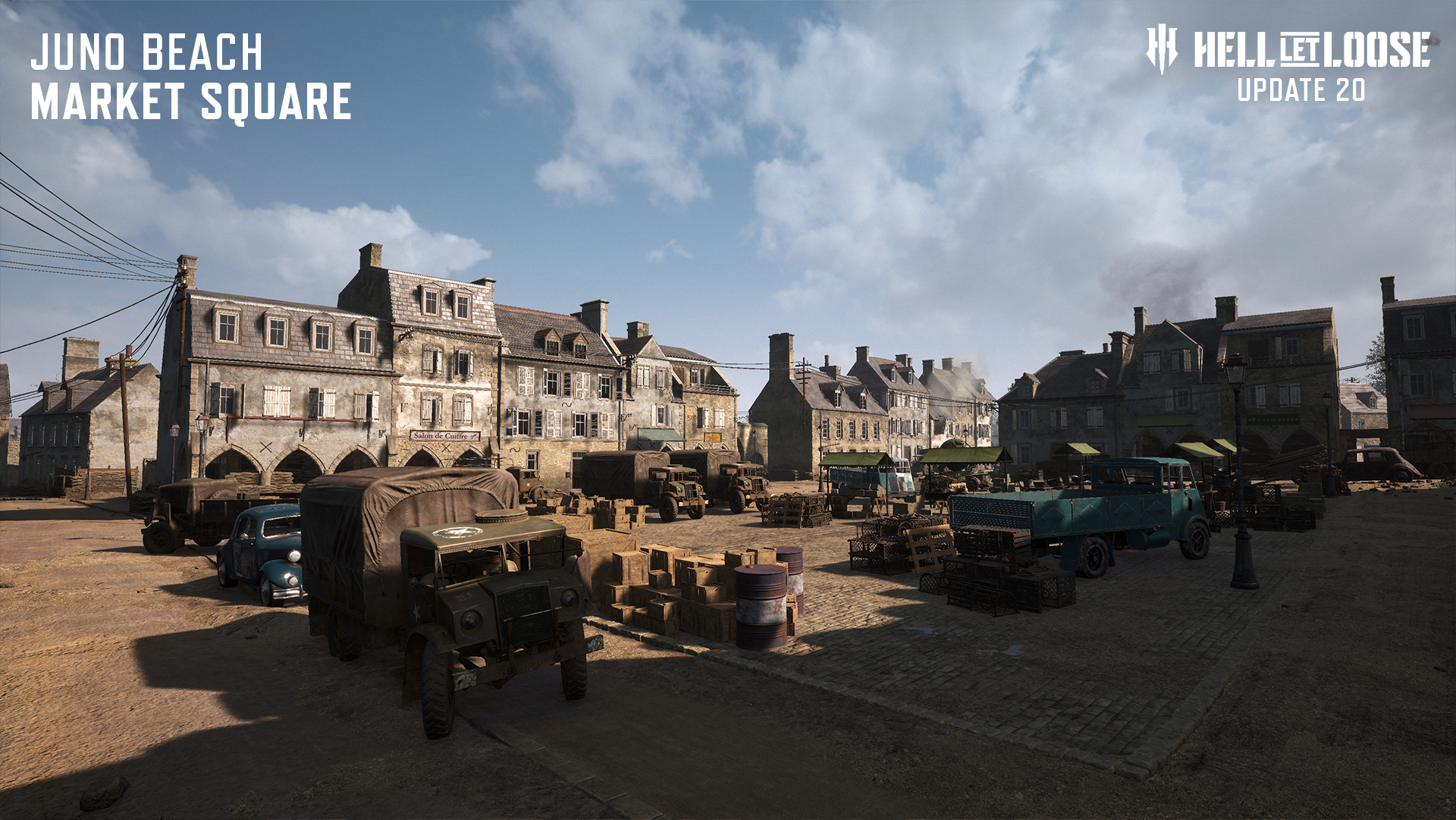
Situated within the once-bustling fish markets of Courseulles-sur-Mer, Market Square delivers a dense urban environment focused on building-to-building movement, strategic gardens and long streets that create dangerous sightlines for infantry and vehicles alike.
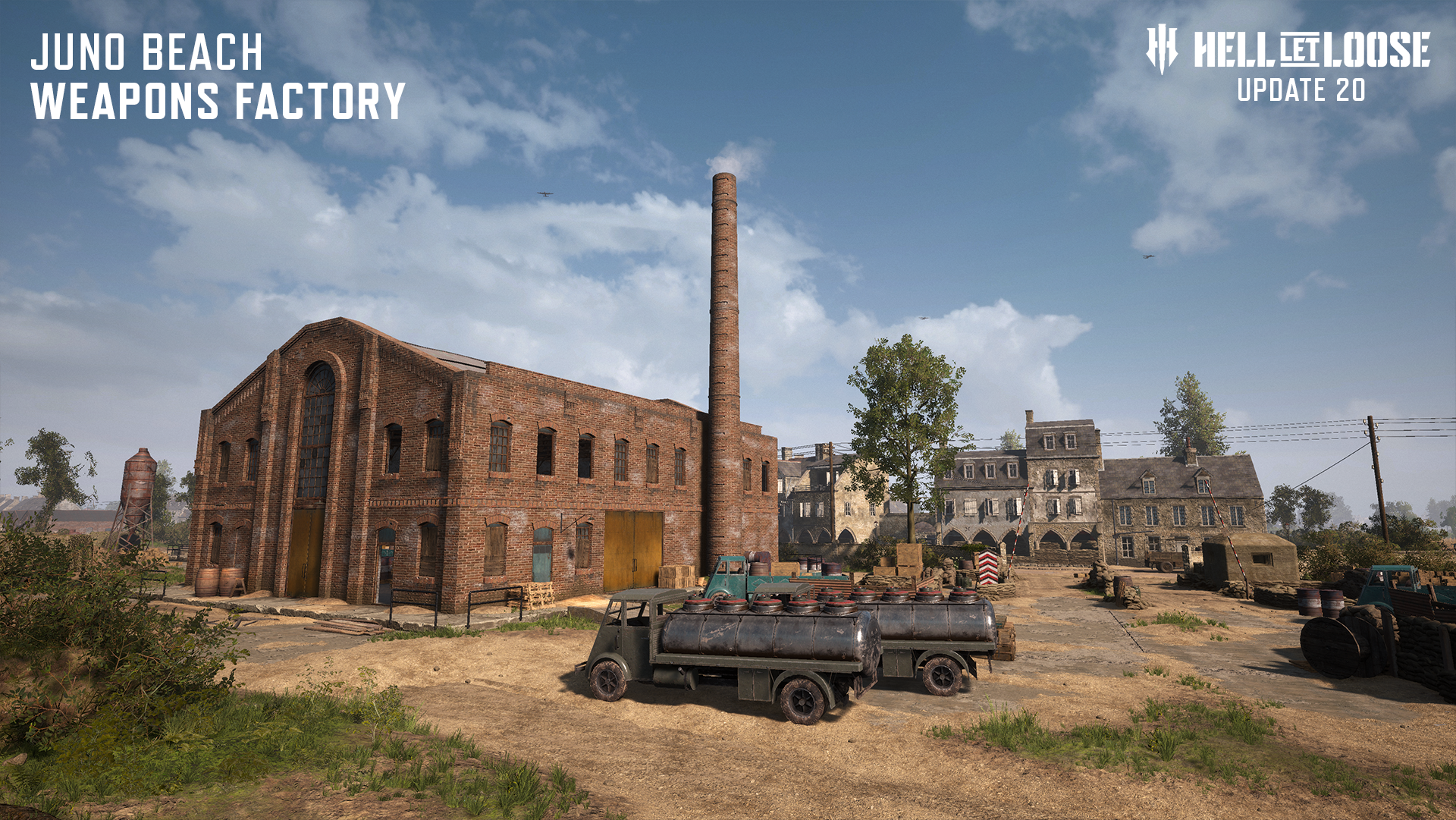
Serving as an industrial hub for German war production, the Weapons Factory stands as a dense and imposing stronghold. Its sprawling layout and multiple entry points allow it to be approached from several directions, encouraging coordinated assaults and intense close-quarters combat.
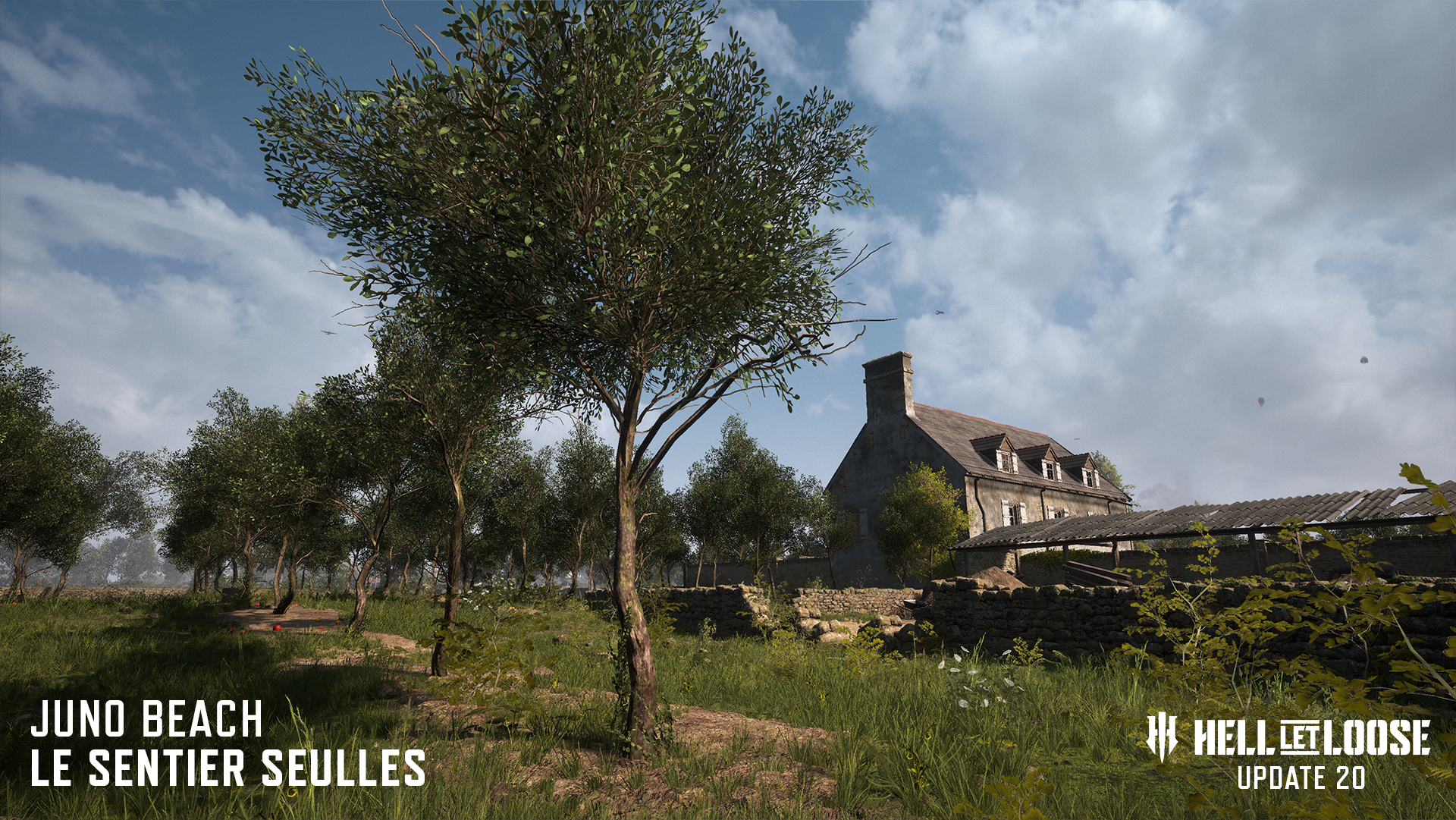
Le Sentier Seulles opens the waterway network into shallower crossing points for both infantry and vehicles, shifting the combat focus away from the marina and back into the rural countryside. The Capture Point also features a prominent farmstead and orchard that provide additional cover and defensive opportunities.
This commune acts as a natural transition point between the built-up village spaces and the open countryside beyond. Surrounding wheat fields provide tall soft cover for advancing players, while also offering long sightlines toward the distant Église Saint-Germain Church.
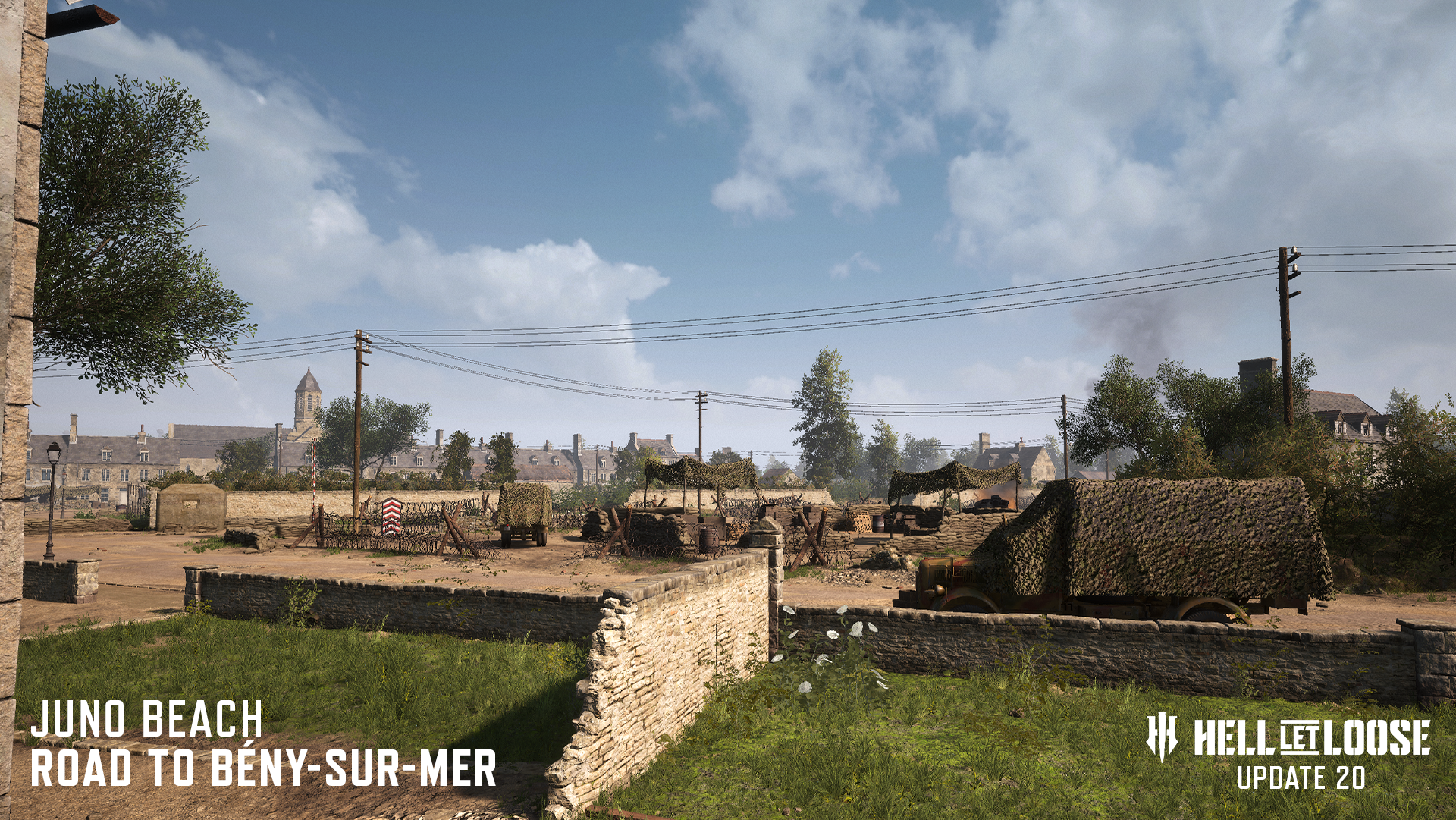
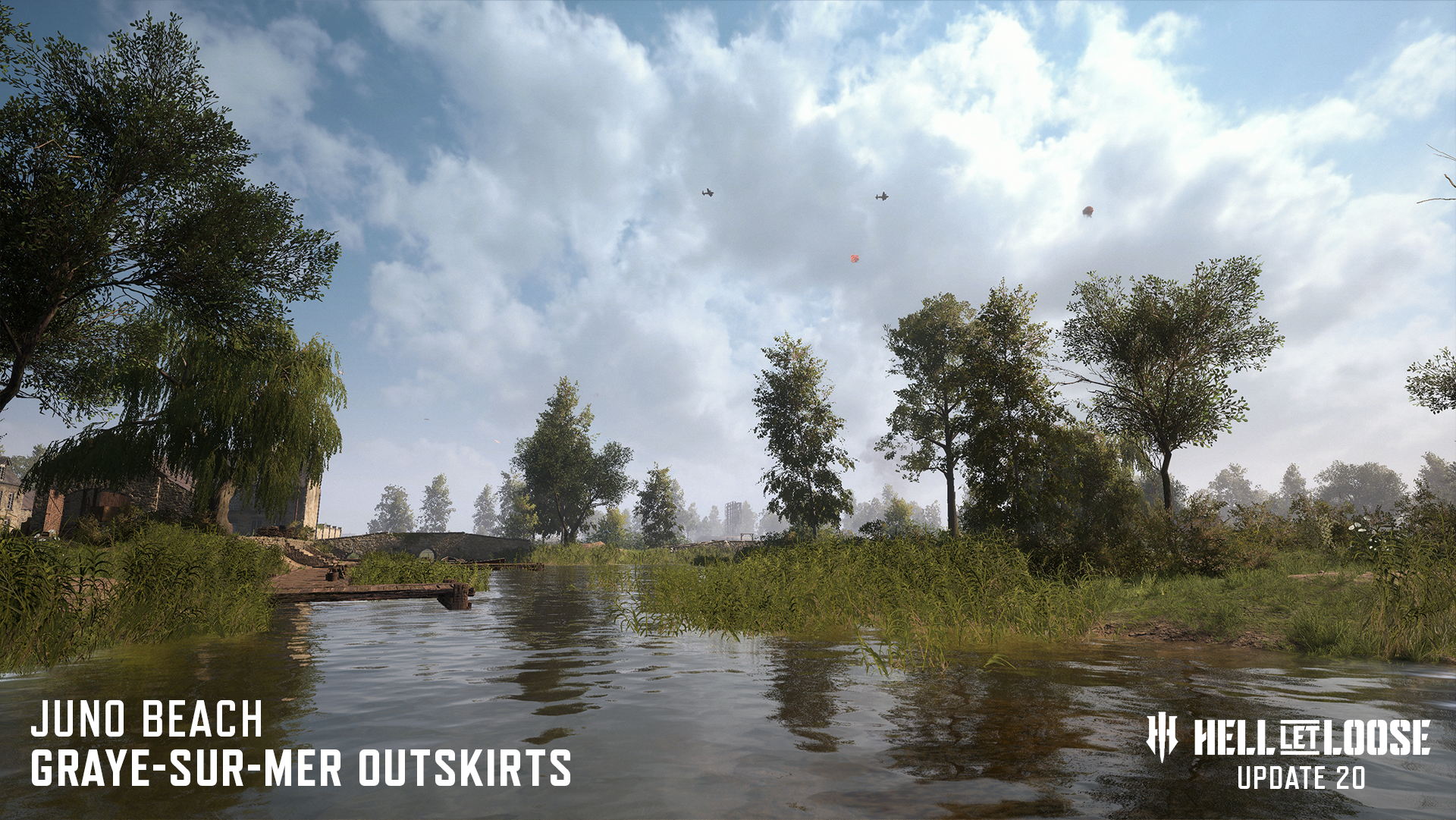
Leaving behind the denser urban areas, Graye-sur-Mer Outskirts expands into a more traditional rural battlefield, featuring rough terrain, shallow waterways and smaller defensive strongholds scattered throughout the countryside.
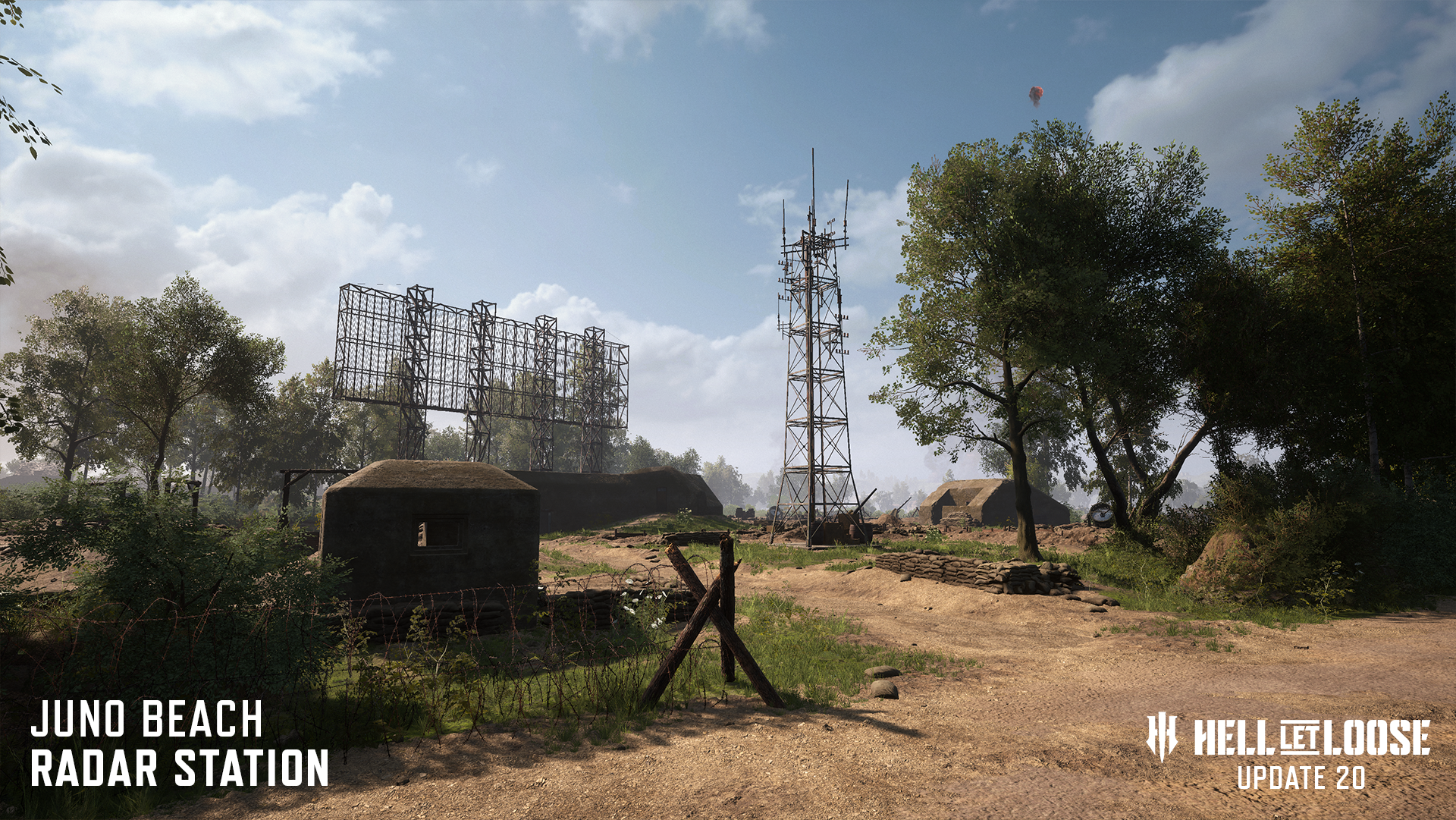
Hidden amongst the hedgerows, the Radar Station forces players to navigate trench systems and German Forces defensive positions in order to capture this close-quarters objective.
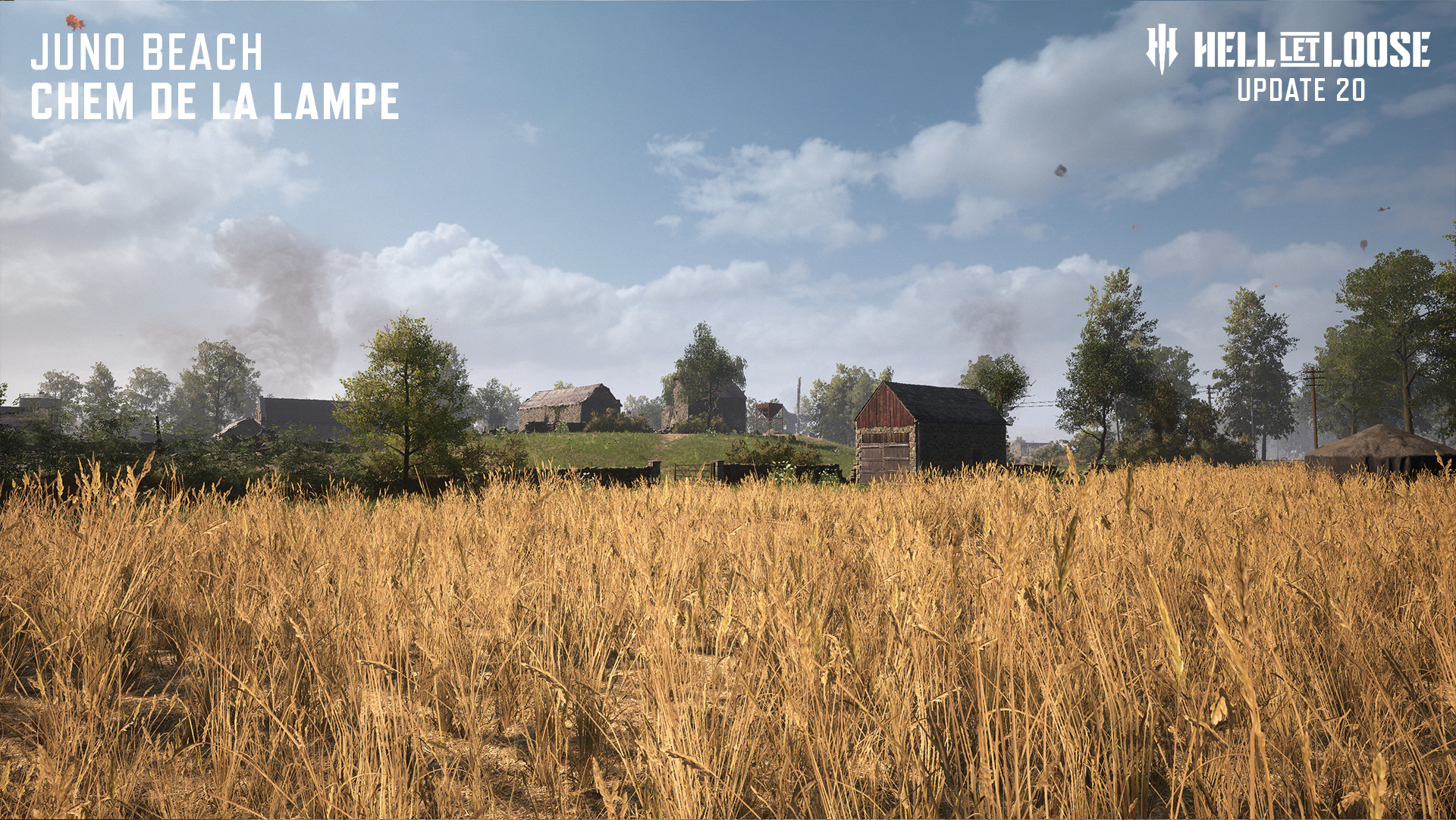
Situated deep within the rural heartland, Chem De La Lampe represents the final frontier of the Canadian advance across the map. Wheat fields provide tall soft cover for advancing infantry, while entrenched German defensive positions create strong opportunities for counter-attacks.
Update 20 marks the introduction of the Canadian Forces to Hell Let Loose.
Arriving alongside Juno Beach, the Canadian Forces bring a new selection of weapons, vehicles and cosmetics inspired by the Canadian participation in WW2.
This new Canadian Force is the perfect fit for the new Juno Beach map and recognises the Canadian participation in WW2.
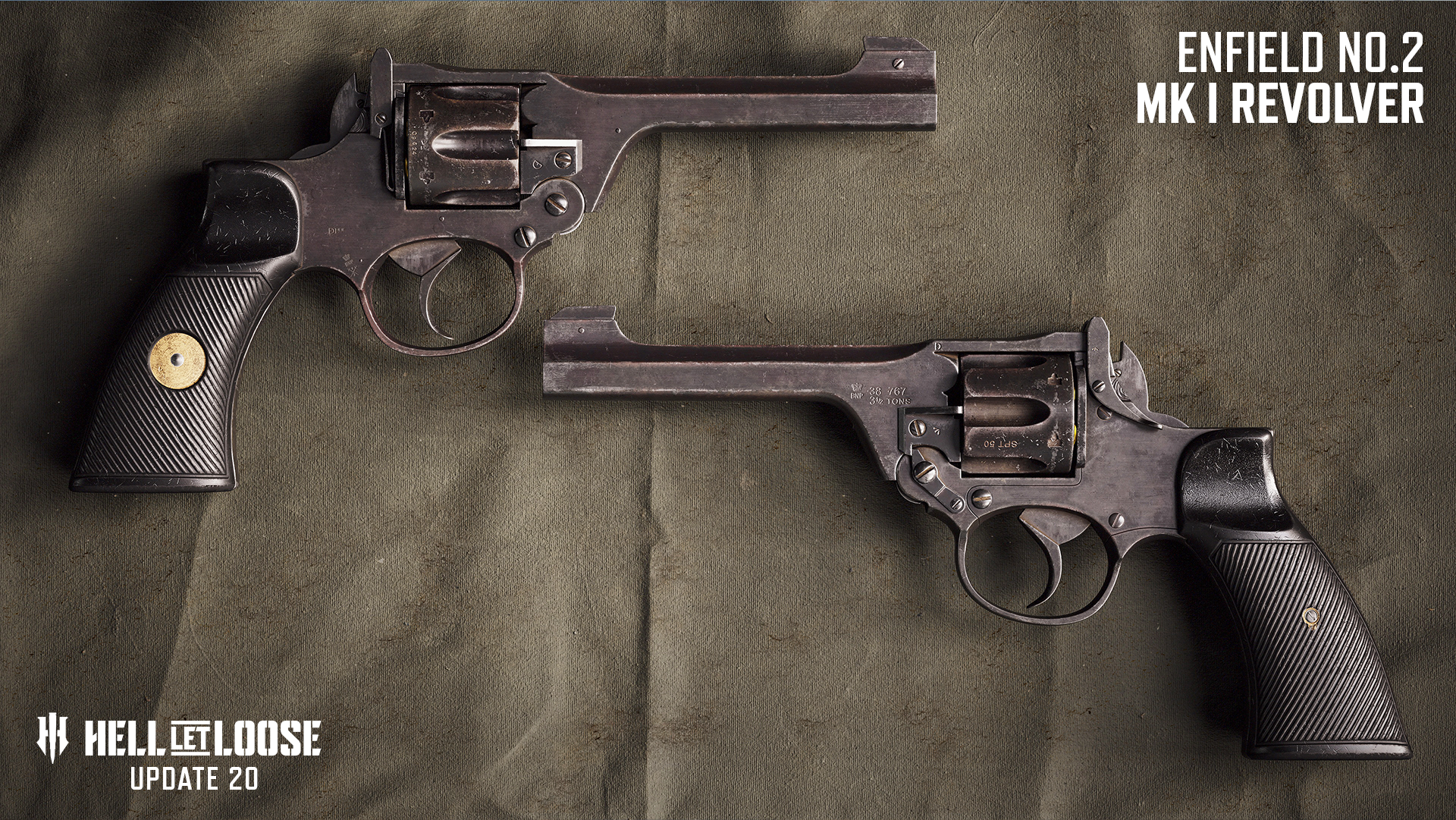
The Canadian Forces arrive equipped with a selection of new and returning weaponry, including:
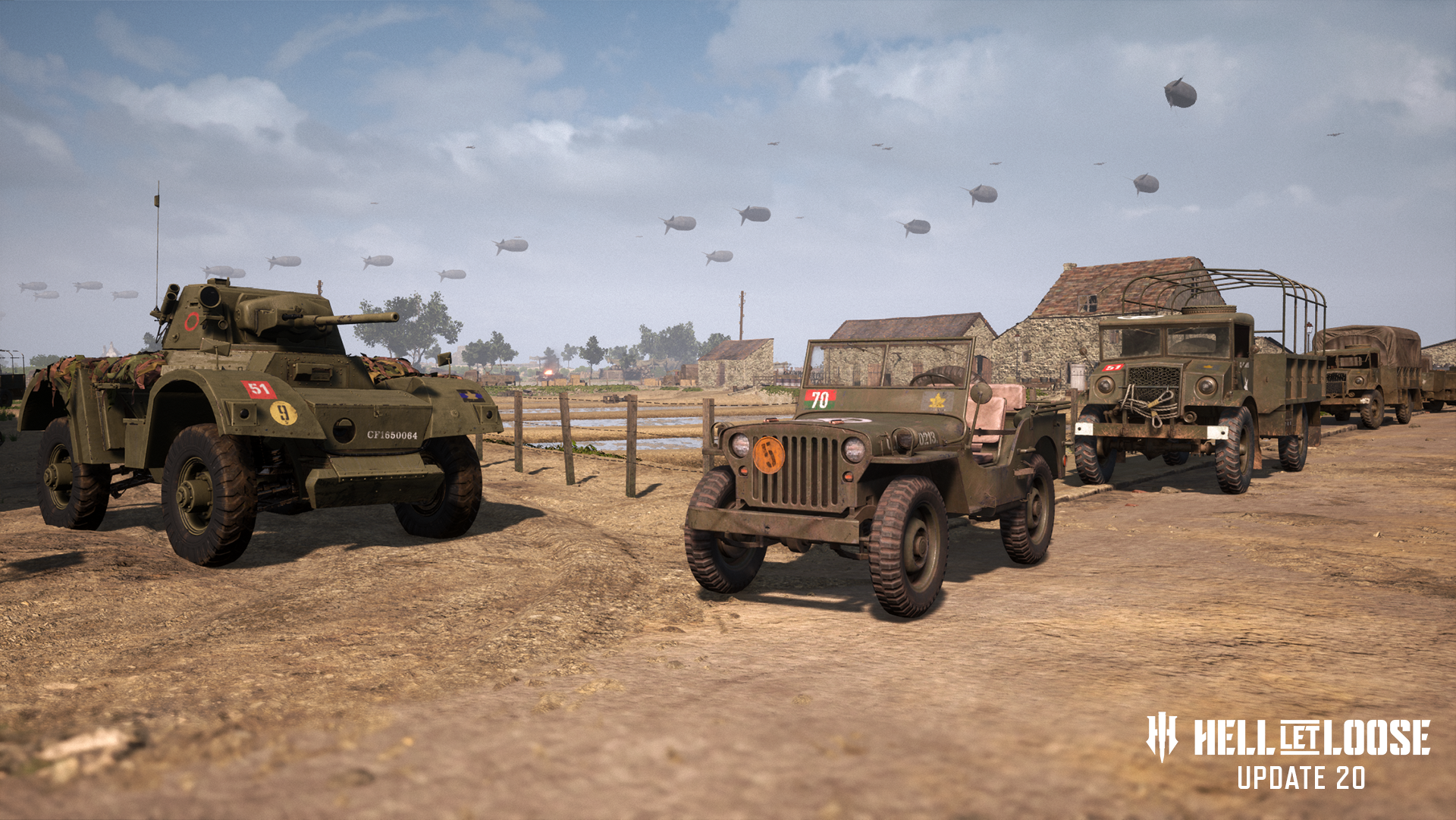
The Canadian Forces also introduce a new transport and supply truck, alongside historically accurate markings across their armored vehicle roster.
The full vehicle lineup includes:
New Canadian cosmetics have been added across multiple roles, including:
Following changes introduced in Patch 19.1, Artillery squads are able to equip both tanker and infantry cosmetics to better represent both static artillery crews and self-propelled artillery units.
Due to the Churchill Mk III A.V.R.E. historically being crewed by British forces, players using the Canadian Artillery squad on Juno Beach will be able to switch between Canadian and Allied appearances within the Barracks customization menu.
The Canadian variant can only equip infantry uniforms, while the Allied variant can equip tanker uniforms.
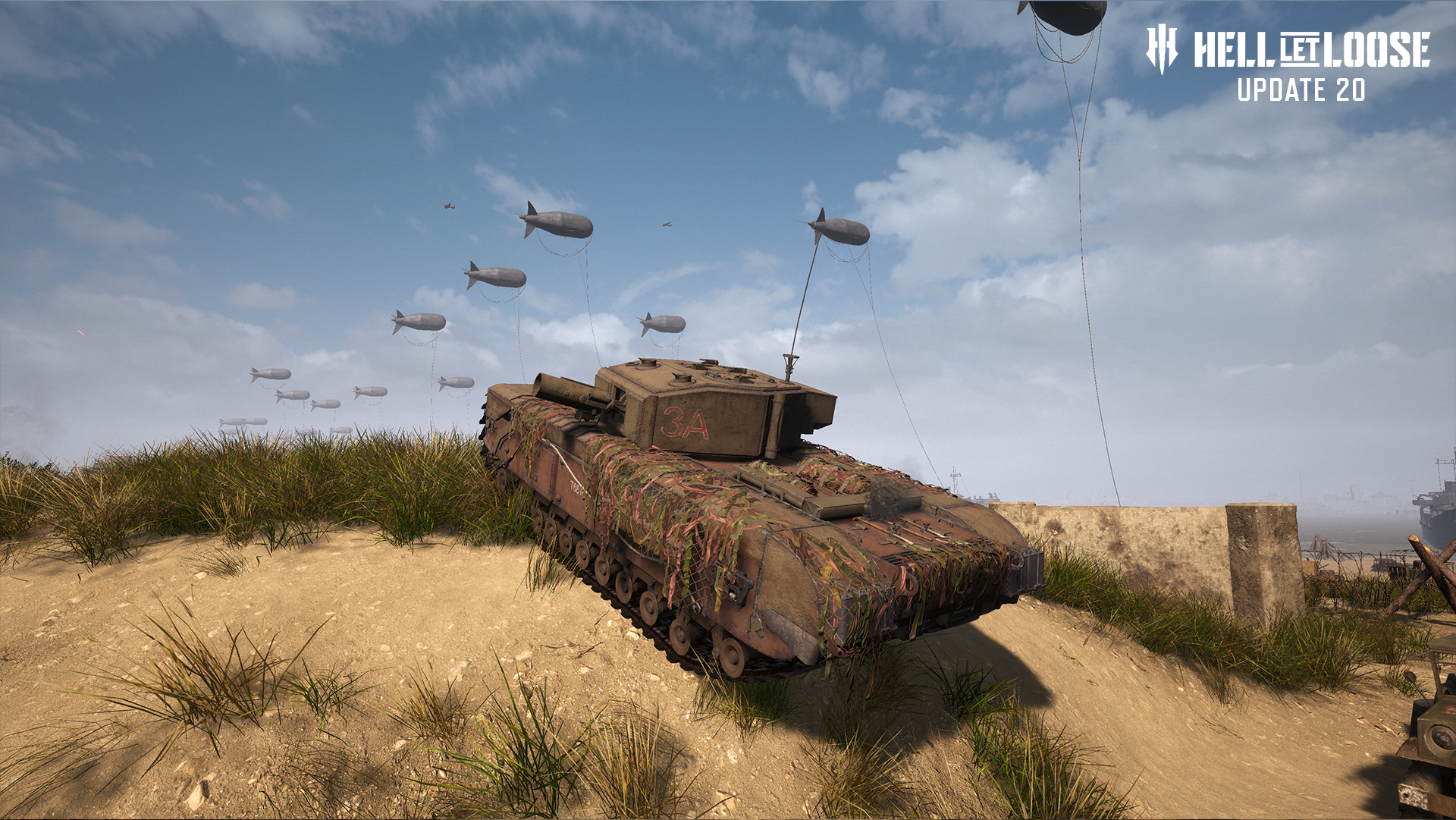
For Update 20, we set out to deepen the armor gameplay experience with a range of impactful new features and balance improvements.
With the introduction of the new Armor Resistance System, tank combat has been reworked to place a greater emphasis on positioning, armor knowledge and coordinated engagements. These changes are designed to reward skill-based shots and deepen the tactical decision-making involved in armored warfare.
Alongside the new resistance mechanics, Update 20 also introduces Smoke Launchers and Shell Unloading, providing tank crews with new tactical and quality of life tools during combat.
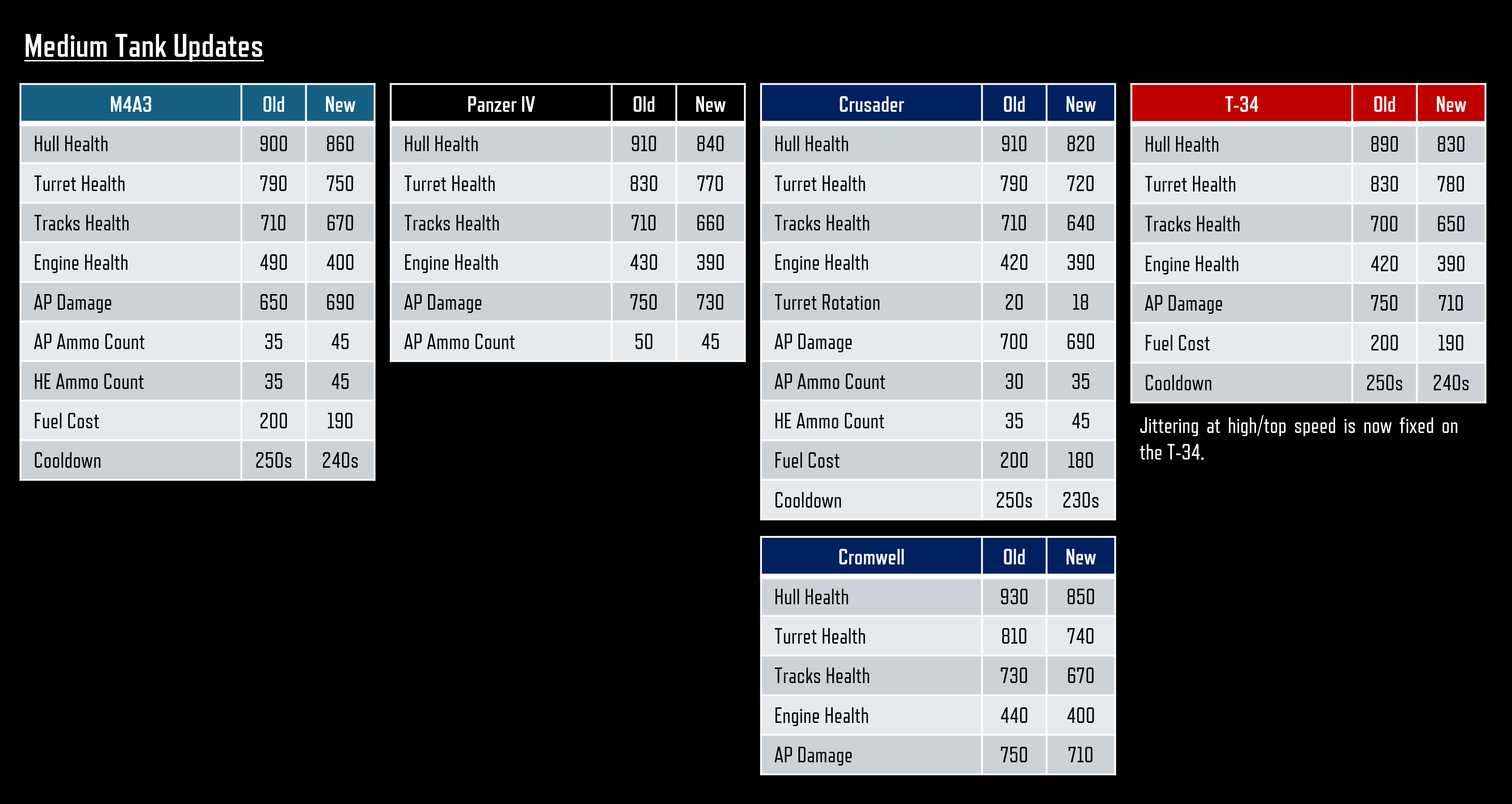
To support these new systems, a full balance pass has been carried out across all armored vehicles. Health pools, armor values, damage outputs, ammunition counts, fuel costs and cooldowns have all been reviewed and adjusted in order to create clearer vehicle roles and establish a stronger foundation for future armor updates.
These changes also pave the way for the new tank type planned for a future update. Keep an eye out for more details soon…
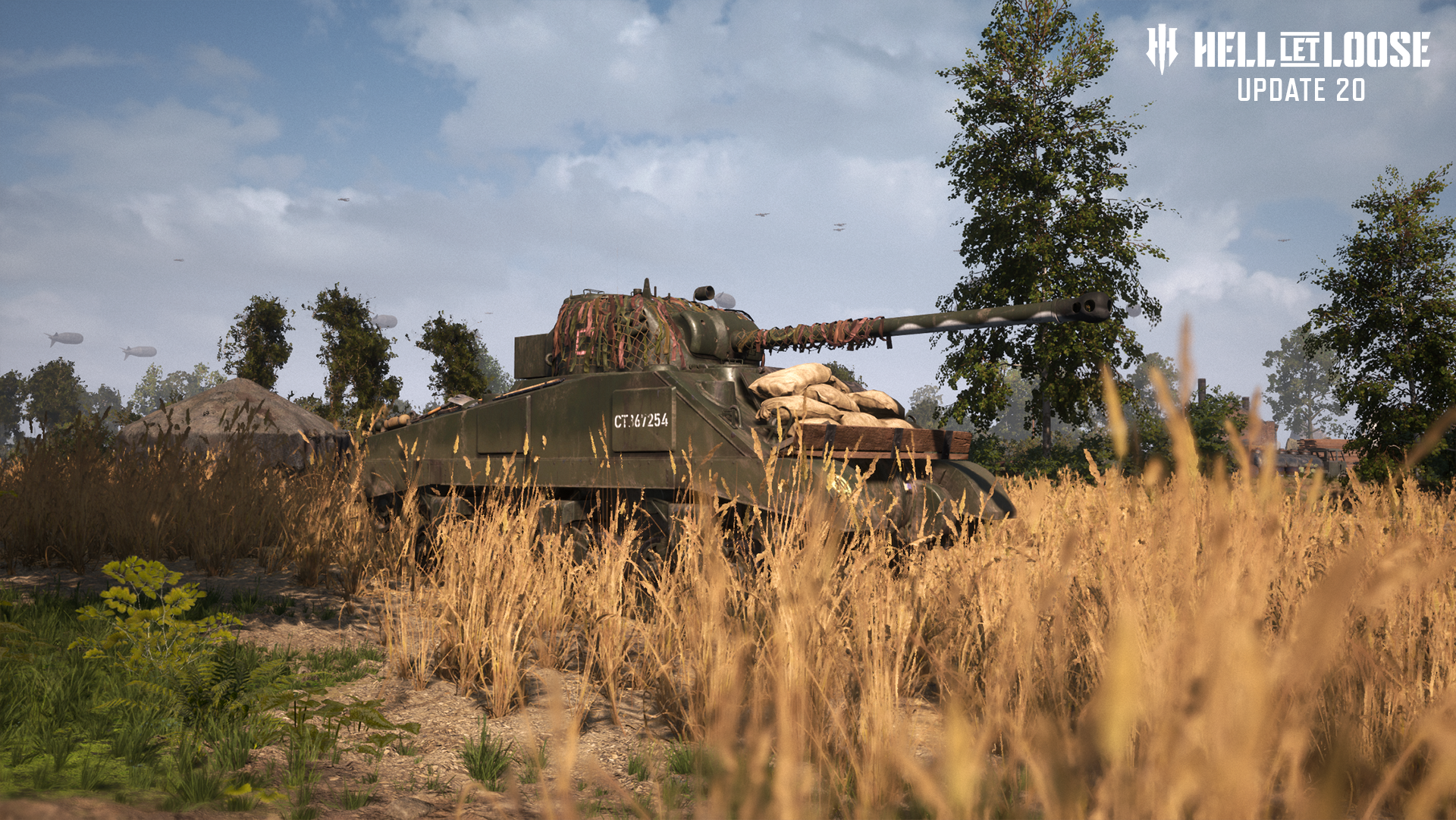
All tanks now feature a new Armor Resistance System. Armor thickness now provides percentage-based damage reduction depending on the strength of the impacted armor plate.
The updated resistance values are:
With the updated health pools, damage values and resistance system now in place, armored combat will follow the below engagement expectations when damaging hull armor:
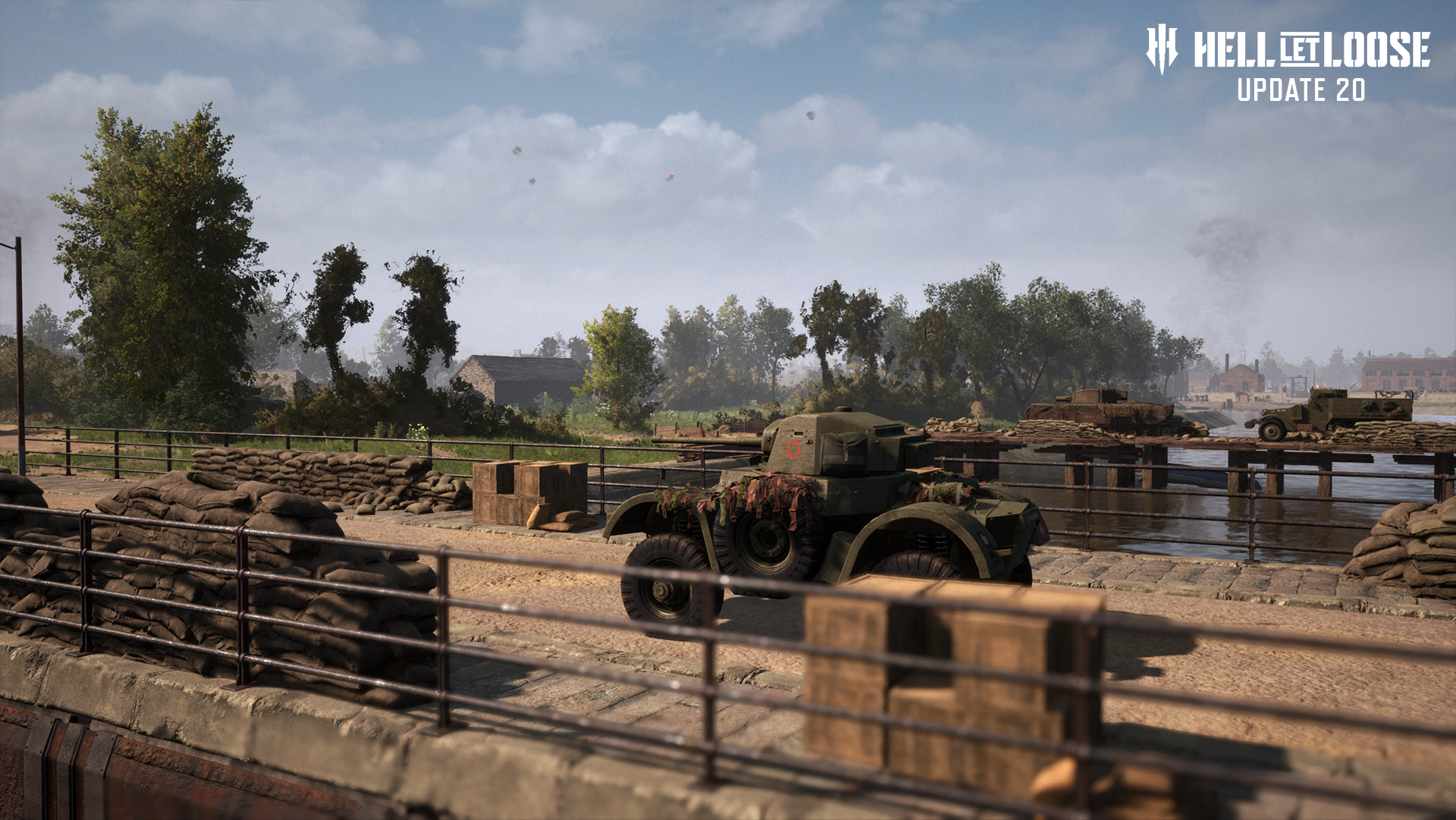
A selection of tanks have now been equipped with Smoke Launchers, allowing tank commanders and spotters to deploy smoke for additional cover during combat.
On PC, smoke can be activated using the Spacebar, while controller players can deploy smoke using Right Bumper / R1.
Smoke launcher systems differ depending on the vehicle:
Internal and external launchers fire in the direction the turret is facing, while exhaust-based systems require the engine to be running and the vehicle to be stationary or in neutral.
We’ll continue investigating the addition of smoke systems to other historically appropriate vehicles in future updates.
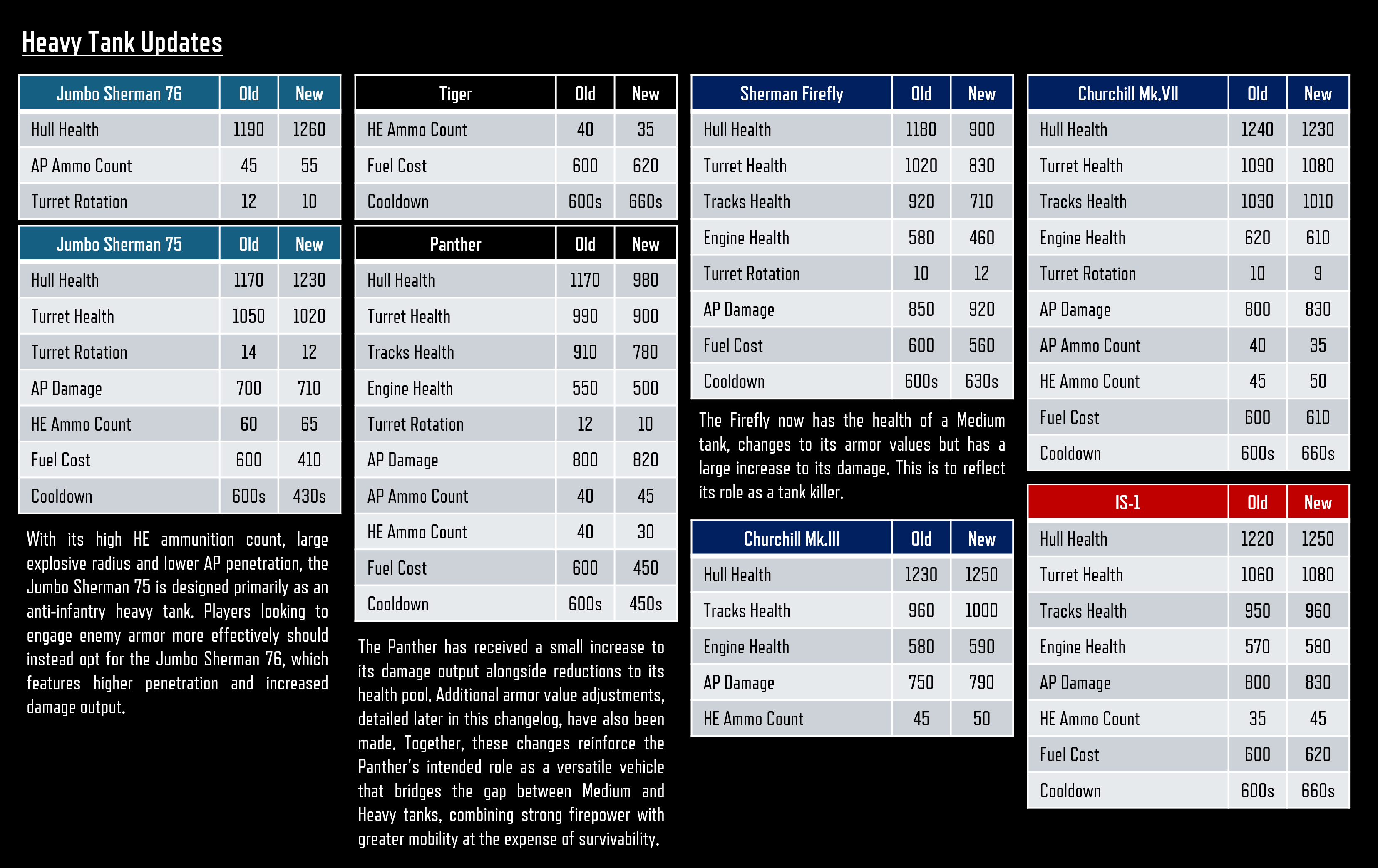
With the new resistance system in place, the current health and damage values needed adjusting. Health adjustments for more survivability and damage adjustments for more impact in a fight; both of which are key traits on Heavy tanks.
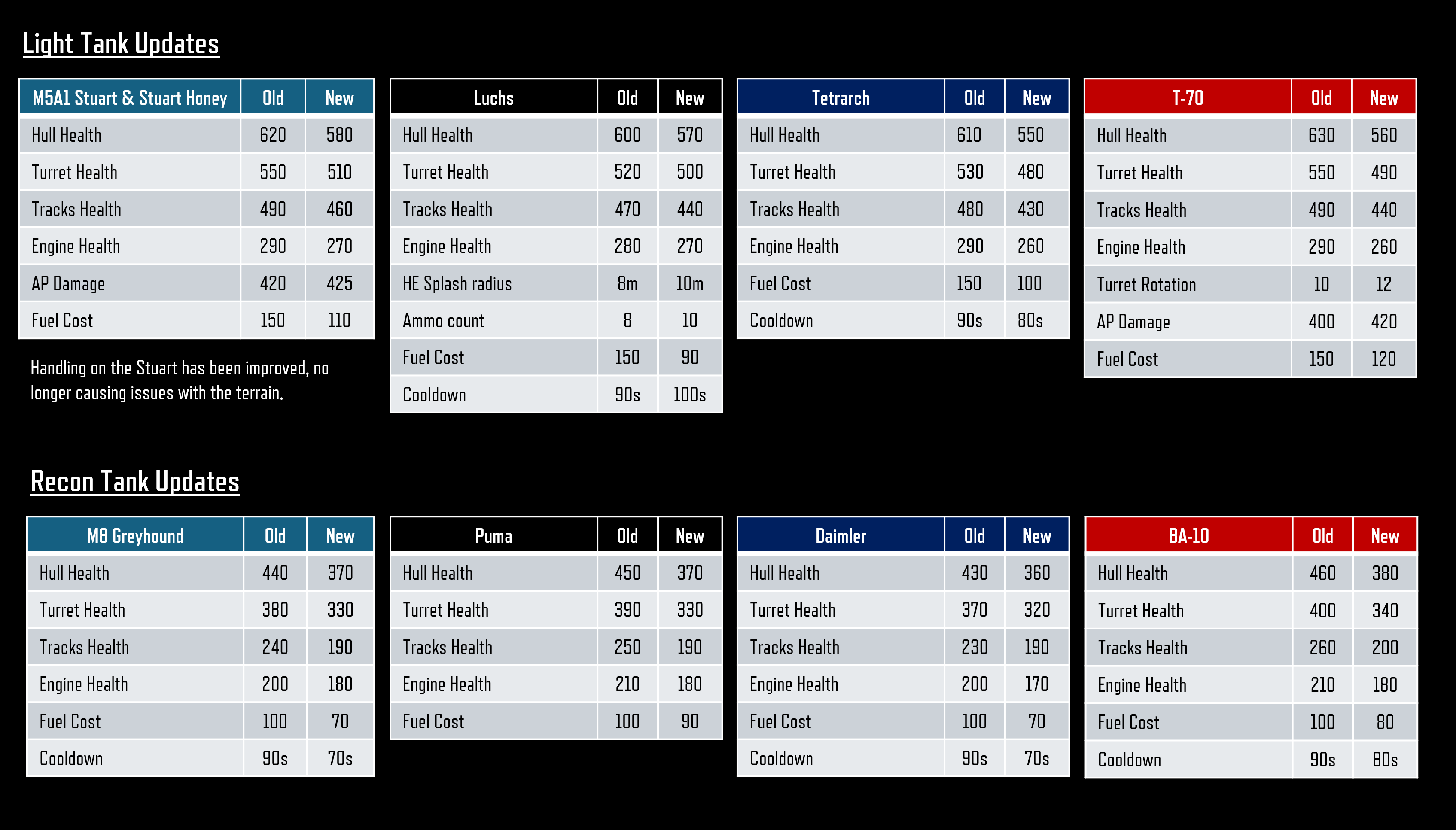
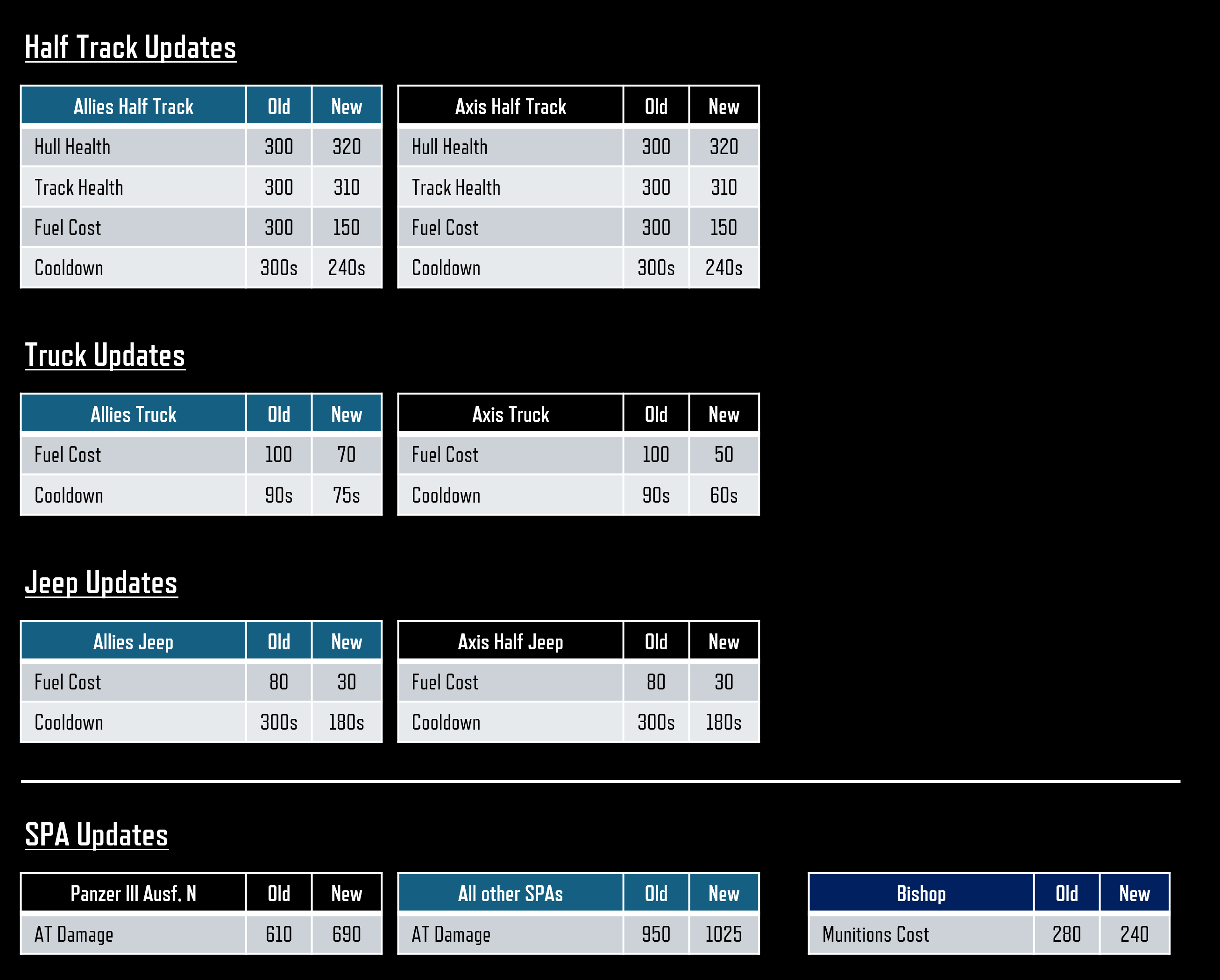
With the introduction of the new Armor Resistance System, all Self-Propelled Artillery vehicles, with the exception of the Churchill A.V.R.E., have received an increase to their anti-tank damage values. As the A.V.R.E. already bypasses armor, no changes were required.
These adjustments are intended to offset the effects of the new resistance calculations and maintain a similar performance profile against armored targets compared to previous updates.
The Bishop SPA has also had its munitions cost reduced.
When SPAs were first introduced, their shells were able to destroy enemy Outposts. This functionality was originally intended to provide Self-Propelled Artillery with a unique role distinct from static artillery.
Following the balance adjustments and improvements introduced in Patch 19.1, SPAs can no longer destroy Outposts through explosive damage alone. However, like all other vehicles, they remain capable of destroying Outposts through direct proximity.
As part of the wider armor overhaul, a number of vehicles have received adjustments to their armor profiles. These changes are intended to better reflect the strengths and weaknesses of their historical counterparts while maintaining balance within Hell Let Loose.
The top armor of all Heavy tank turrets has been reduced. Light tanks can now penetrate this area.
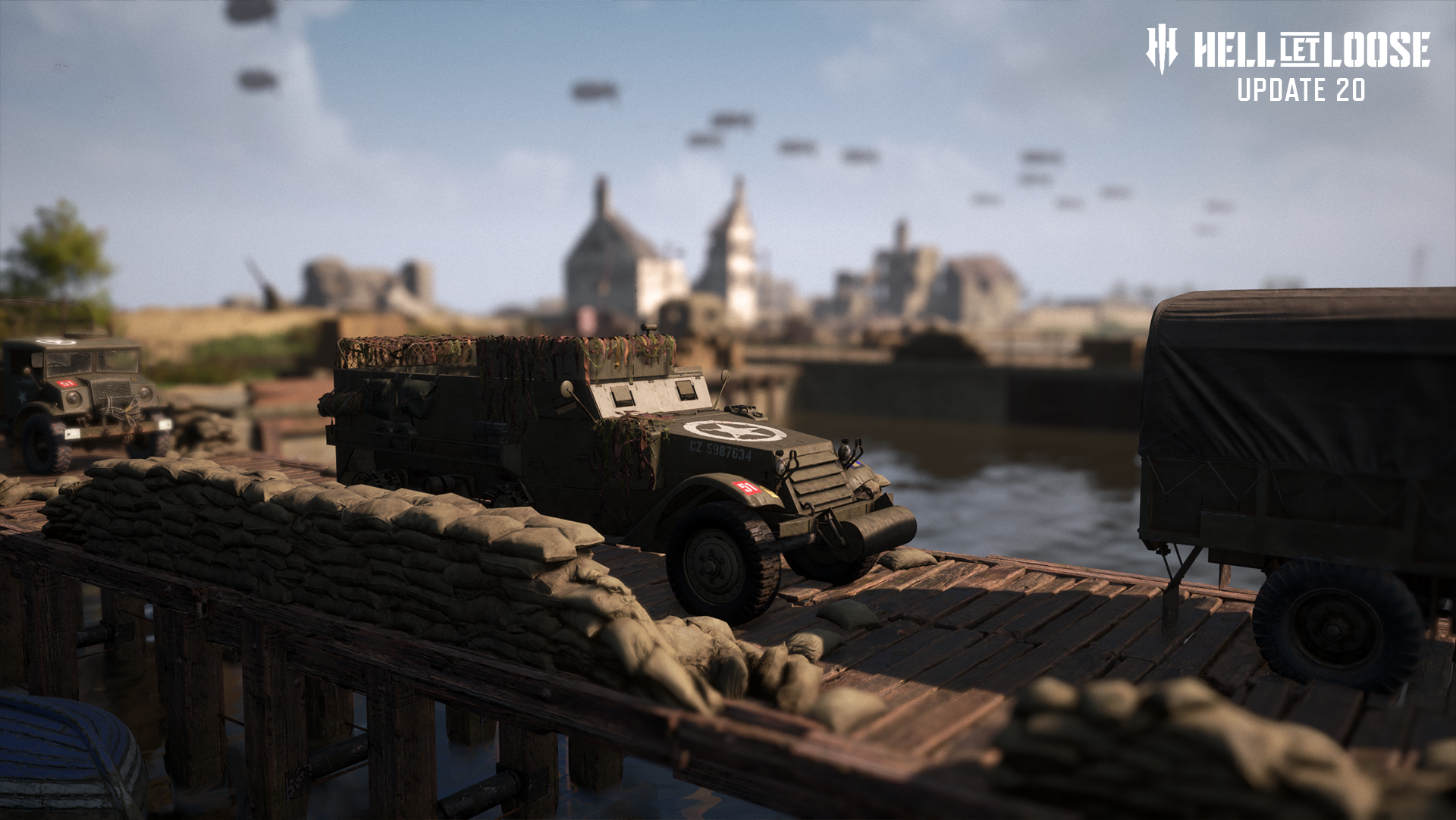
Now that most of the vehicles have had a fuel balance pass, the amount of fuel and time taken to salvage have been updated. Here are the updated values:
Shell Unloading has now been introduced across all armored vehicles, allowing tank crews greater flexibility when adapting to changing combat situations.
Unload times are determined by vehicle class:
Tank Commander and Tank Crewman loadouts across all factions have now been updated to include a hammer.
This allows armored crews to assist with constructing defences and provides a faster way to salvage destroyed vehicles during combat operations.
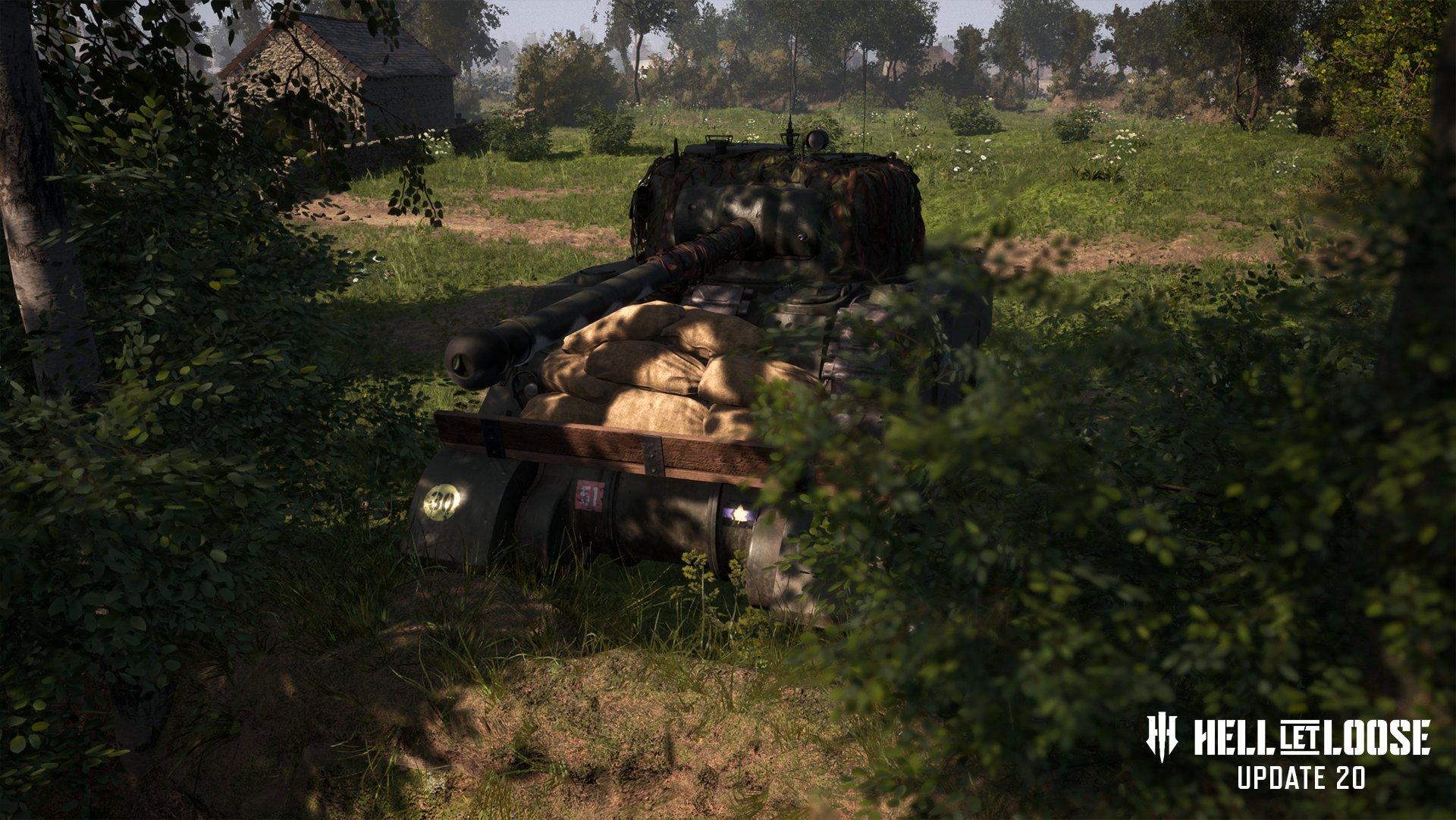
As always, our resident armor War Correspondents, Fresh and Raz, have been hard at work updating the HLL Armor Hub with all of the latest Update 20 vehicle statistics and analytics.
Whether you’re looking to compare vehicles, learn the strengths and weaknesses of each tank, or take your first steps into armored warfare, be sure to check out the updated Armor Hub website!
As a feature to improve player safeguarding, players are now able to report another player with a reason for reporting and add an optional written message to provide more information. This data helps support evidence gathering and enables action against individual players when necessary.
As part of the wider prone improvements, we’ve made a number of updates to how bipod-deployed players operate.
Players deploying bipods on uneven terrain, slopes and hillsides should now appear more naturally aligned with the ground beneath them. This helps reduce instances of characters appearing to float above the terrain or clip into the ground when viewed by other players.
These improvements also allow player animations to better adapt to changes in terrain and positioning while deployed, resulting in a more consistent and realistic visual experience.
Whilst in the main menu in-game, you will now find a “Newsfeed” section that will take you to the latest Dev Briefs, Changelogs, and more.
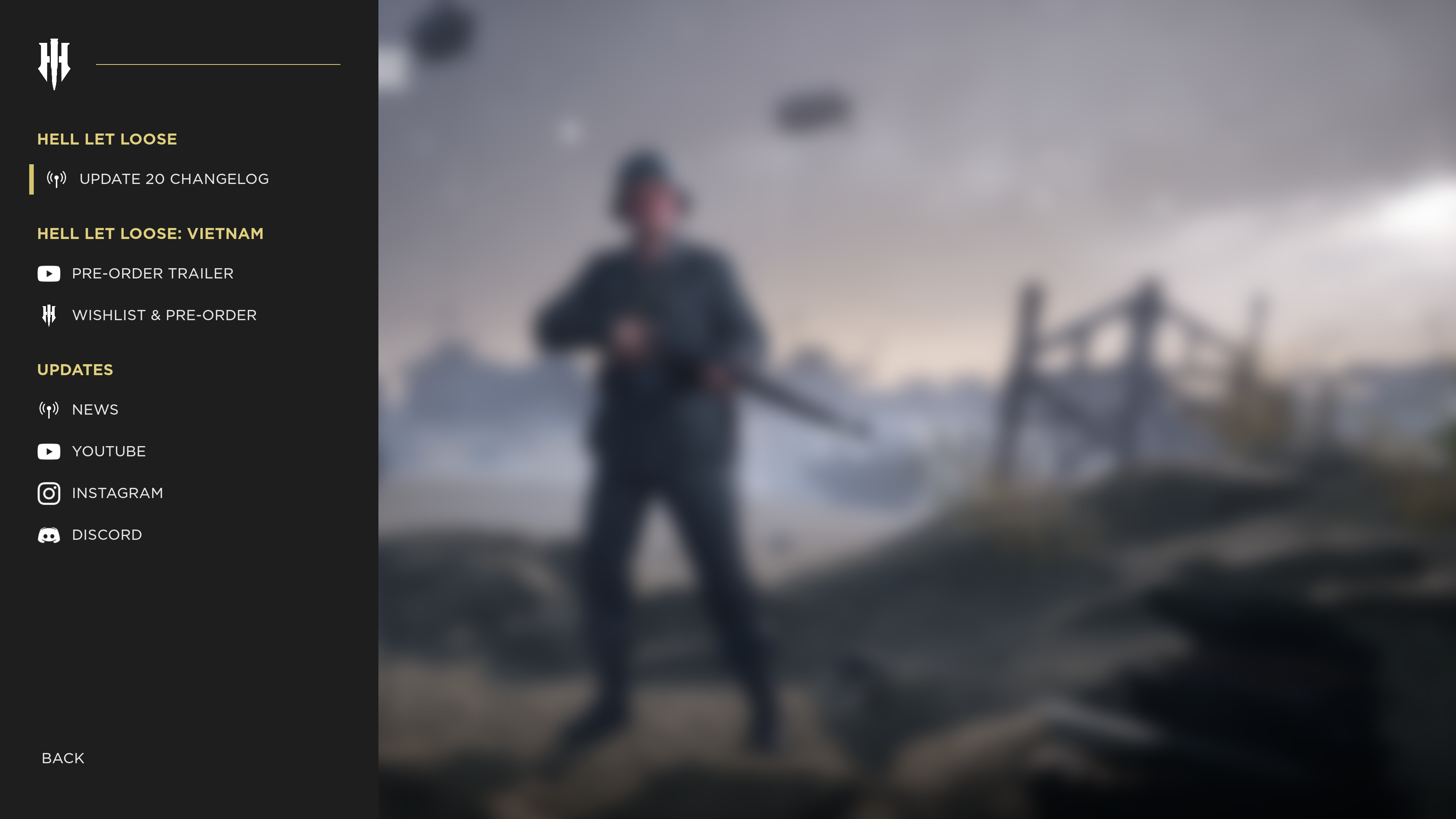
Following player feedback since the introduction of Quick Play, we’ve made improvements to how the system finds suitable matches, particularly for players joining as part of a party.
Previously, Quick Play could sometimes place players into servers where there were not enough available spaces for every party member to join the same team. To help reduce the chance of this happening, Quick Play will now avoid servers that are already at capacity, even if they still have open queue slots.
We’ve also increased the number of free spaces required before a server is considered suitable for a party. This buffer now scales based on party size, helping ensure there is enough room for everyone to join together.
Players can still manually join server queues through the Server Browser.
For both the British and Canadian forces, the Rifle No.4 Mk1 has had its fire rate increased by 40% to bring it in line with the fire speed of the SMLE.
There is loads happening in the community currently. First up, tomorrow we will be livestreaming after the Update goes live over on the Hell Let Loose Official Twitch, showing off the new update to the community. Be sure to jump into the chat and get chatting!
Powerbits.